Common Causes of Hair Fall in Men
1. Male Pattern Hair Loss
Androgenetic alopecia is a common cause of progressive hair thinning in men. It usually begins with a receding hairline or thinning at the crown due to genetic and hormonal factors.
Early treatment may help preserve existing hair. In advanced cases, hair transplant treatment in Udaipur may be considered after evaluating suitability.
2. Stress and Lifestyle Changes
Significant stress, illness, rapid weight loss, or nutritional deficiencies can trigger telogen effluvium, a condition that causes excessive hair shedding. Shedding often becomes noticeable two to three months after the triggering event.
3. Scalp Conditions
Dandruff, fungal infections, psoriasis, and scalp inflammation can contribute to itching, irritation, and hair shedding or breakage. Persistent symptoms require appropriate dermatological care.
Common Causes of Hair Fall in Women
1. Hormonal Changes and PCOS
Hormonal conditions such as PCOS and thyroid disorders may contribute to hair thinning. Women may notice widening of the central hair part, reduced volume, or increased scalp visibility.
2. Postpartum Hair Shedding
Hormonal changes after childbirth can cause temporary excessive shedding. Hair growth often improves gradually, although persistent thinning should be evaluated.
3. Nutritional Deficiencies
Low iron stores, inadequate protein intake, and restrictive diets may affect hair growth. A dermatologist may recommend blood tests when a deficiency is suspected. The NHS guidance on hair loss also identifies stress, illness, weight loss, and iron deficiency as possible causes of temporary hair shedding.
4. Female Pattern Hair Loss
Female pattern hair loss causes gradual thinning, especially around the crown and central part. Early diagnosis can help determine appropriate treatment options.
How Udaipur’s Water, Climate and Lifestyle Affect Hair Health
Environmental conditions may influence hair texture, scalp comfort, and breakage. However, these factors should not automatically be considered causes of permanent hair loss.
Hard Water and Hair Breakage
Water containing high levels of calcium and magnesium can leave mineral deposits on hair, potentially affecting its texture, manageability, and resistance to breakage.
Water hardness varies between households in Udaipur. Research published in the International Journal of Trichology found reduced hair tensile strength after hard-water exposure, although other studies have reported different findings. Current evidence does not establish hard water as a direct cause of permanent follicular hair loss.
Using conditioner, avoiding harsh washing practices, and checking household water quality may help manage these concerns.
Heat and Dry Weather
Udaipur’s hot weather and relatively dry conditions during parts of the year can contribute to hair dryness and scalp discomfort. Gentle cleansing, conditioning, and avoiding excessive heat styling can help protect hair quality.
Dust and Pollution
Dust and airborne pollutants can accumulate on the scalp and hair. Regular, gentle cleansing helps remove buildup, although pollution should not automatically be blamed for progressive hair thinning.
Stress and Daily Lifestyle
Work pressure, emotional stress, disrupted routines, and rapid dietary changes can contribute to excessive shedding in some individuals. The American Academy of Dermatology’s guide to excessive hair shedding explains that significant stress and other major life events can trigger temporary shedding. Persistent hair fall should still be evaluated to rule out genetic, hormonal, nutritional, or scalp-related causes.
When Should You Consult a Dermatologist for Hair Fall?
Seek dermatological advice if you experience:
- A receding hairline or widening central part.
- Sudden bald patches or increasing scalp visibility.
- Hair loss accompanied by itching, redness, or scaling.
- Rapidly progressing thinning or painful scalp changes.
- Excessive shedding lasting several weeks or months.
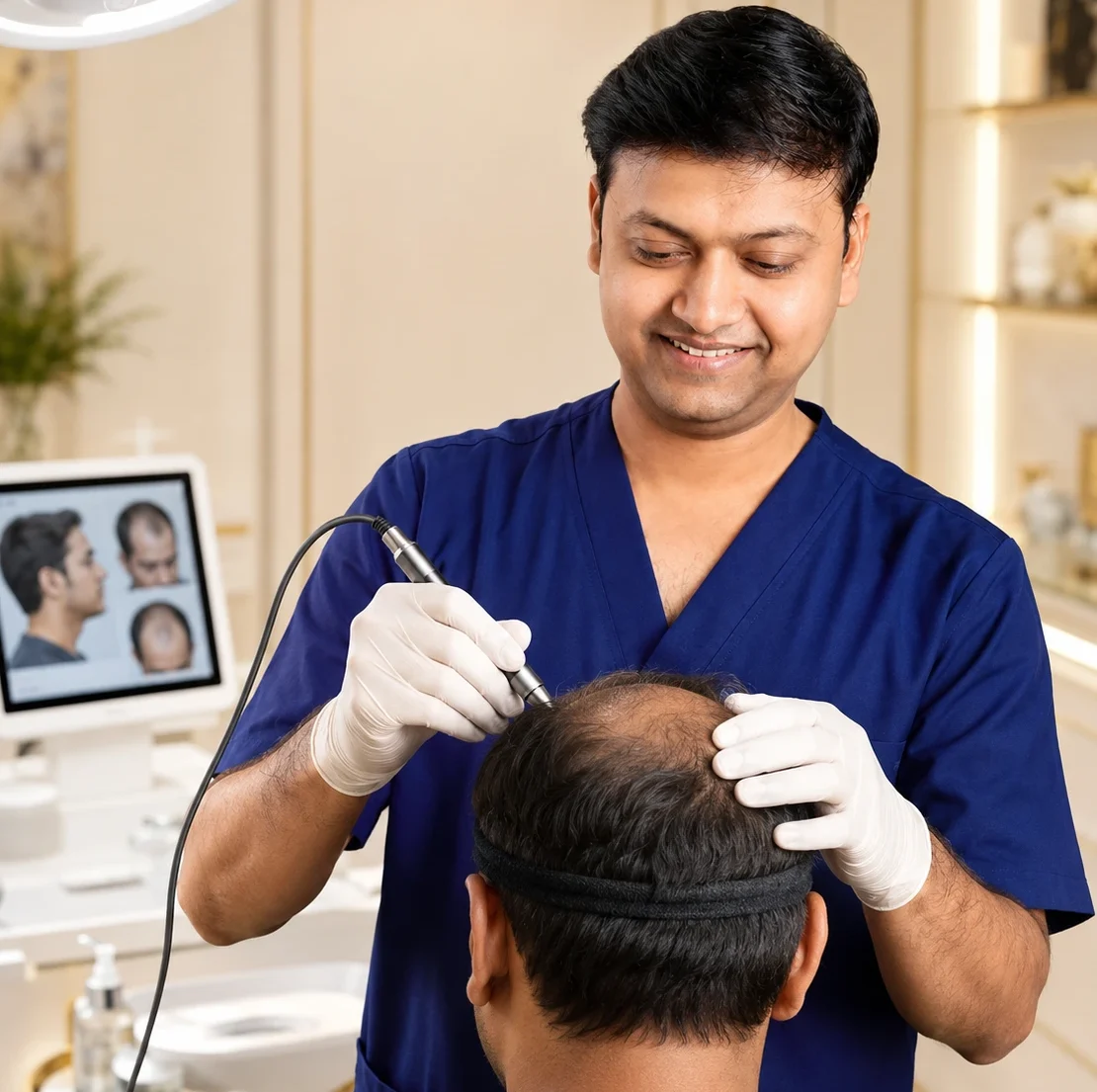
A dermatologist may assess your medical history, examine your scalp, perform trichoscopy, or recommend blood tests when necessary.
Hair Fall Treatment Options in Udaipur
Treatment depends on the underlying cause, the condition of the hair follicles, and individual suitability.
1. Medical Hair Loss Treatment
Treatments such as topical minoxidil and other prescription medications may help manage certain types of pattern hair loss. Medication should be selected according to a dermatologist’s advice.
Learn more in our minoxidil hair loss guide.
2. PRP Hair Treatment
Platelet-rich plasma (PRP) therapy uses a prepared component of the patient’s own blood and may help selected patients with pattern hair thinning. Results vary depending on the individual and diagnosis.
Explore PRP hair treatment in Udaipur.
3. Hair Transplantation
Hair transplantation may be considered for suitable patients with established pattern baldness and adequate donor hair. It involves relocating healthy follicles to areas affected by hair loss.
Learn more about hair transplant treatment in Udaipur.
4. Treating Underlying Causes
Hair fall related to nutritional deficiencies, thyroid conditions, or scalp disorders may improve when the underlying condition is appropriately managed.
Simple Tips to Reduce Hair Breakage
- Use a gentle shampoo and conditioner suitable for your hair type.
- Avoid tight hairstyles and excessive heat styling.
- Maintain a balanced diet with adequate protein and nutrients.
- Avoid taking hair supplements without medical advice.
- Check water hardness if you experience persistent roughness or breakage.
- Consult a dermatologist for persistent scalp irritation or progressive thinning.
Hair Fall Consultation at Dermadent Clinic, Udaipur
Hair fall can have several causes, and choosing the right treatment begins with an accurate diagnosis.
At Dermadent Clinic, Udaipur, patients can seek professional evaluation for hair thinning, excessive shedding, bald patches, and scalp conditions. Depending on the diagnosis, treatment options may include medical management, PRP, or hair transplantation.
Explore Hair Treatments | Book an Appointment
Frequently Asked Questions
1. Does hard water cause hair fall in Udaipur?
Hard water may contribute to mineral buildup and changes in hair-shaft properties, potentially affecting breakage. However, it has not been established as a direct cause of permanent follicular hair loss.
2. Can stress cause excessive hair shedding?
Yes. Significant physical or emotional stress may trigger telogen effluvium, which often becomes noticeable a few months after the triggering event.
3. What are the main causes of hair fall in women?
Common causes include female pattern hair loss, hormonal changes, postpartum shedding, nutritional deficiencies, and thyroid disorders.
4. Can hair grow back after excessive shedding?
Some temporary forms of hair shedding improve after the underlying cause resolves. Genetic and scarring conditions may require medical treatment.
5. When should I seek hair fall treatment in Udaipur?
Consult a dermatologist if shedding persists, visible thinning progresses, bald patches appear, or hair loss is accompanied by scalp irritation.