Acne Scars: Types, Treatment Options and What Results to Expect
Acne scars form when inflammation damages the deeper support structure of the skin during the healing process. They are different from flat brown or red post-acne marks. A true scar changes skin texture: it may create a narrow pit, a broad depression, a rolling wave-like contour or a raised thickened area. Because different scar types respond to different procedures, effective acne scar treatment usually combines methods rather than relying on one device for every patient.
For people searching for acne scar treatment in Udaipur, the first step is to control active acne. Treating scars while new deep pimples continue to form can lead to ongoing scarring and repeated procedures. Once acne is reasonably stable, a dermatologist can map the scar types, skin tone, pigmentation tendency and downtime tolerance and build a staged plan.
Acne Marks vs Acne Scars
Post-inflammatory hyperpigmentation is a flat brown or grey mark left after acne. Post-inflammatory erythema is a flat red or pink mark. These discolorations may fade and can respond to sunscreen, topical treatment and selected procedures. Acne scars involve structural textural change and usually need procedures that remodel or release scar tissue.
Main Types of Atrophic Acne Scars
| Scar Type | Appearance | Common Treatment Approaches |
|---|---|---|
| Ice-pick | Deep narrow pits | TCA CROSS, punch techniques, selected laser combination |
| Boxcar | Round/oval depressions with sharper edges | Fractional laser, microneedling, punch elevation in selected scars |
| Rolling | Broad shallow waves tethered beneath skin | Subcision, microneedling, fillers in selected cases |
| Mixed scars | Combination of several patterns | Multimodal plan |
Raised Acne Scars
Hypertrophic and keloid scars rise above the skin rather than forming depressions. They are more common on the chest, shoulders, jawline and certain body areas. Treatments can include steroid injections, silicone-based care, cryotherapy, laser or other approaches depending on the scar. Procedures used for depressed scars are not automatically appropriate for raised scars.
Why One Treatment Rarely Fixes Every Scar
An ice-pick scar has a different shape and depth from a rolling scar tethered to deeper tissue. A fractional laser can stimulate collagen and improve overall texture but may not fully release deep tethering. Subcision can release tethered rolling scars but does not close narrow ice-pick pits. Combining techniques according to scar anatomy generally makes more sense than selling a single procedure as a cure.
Microneedling and Derma Pen
Microneedling creates controlled micro-injuries that stimulate repair and collagen remodeling. It can be useful for mild to moderate atrophic scars and overall texture. Multiple sessions are usually needed. Depth and technique should be selected carefully, particularly in darker skin tones where excessive inflammation can trigger pigmentation.
Read more about Derma Pen in Udaipur and our microneedling guide.
Fractional CO2 Laser
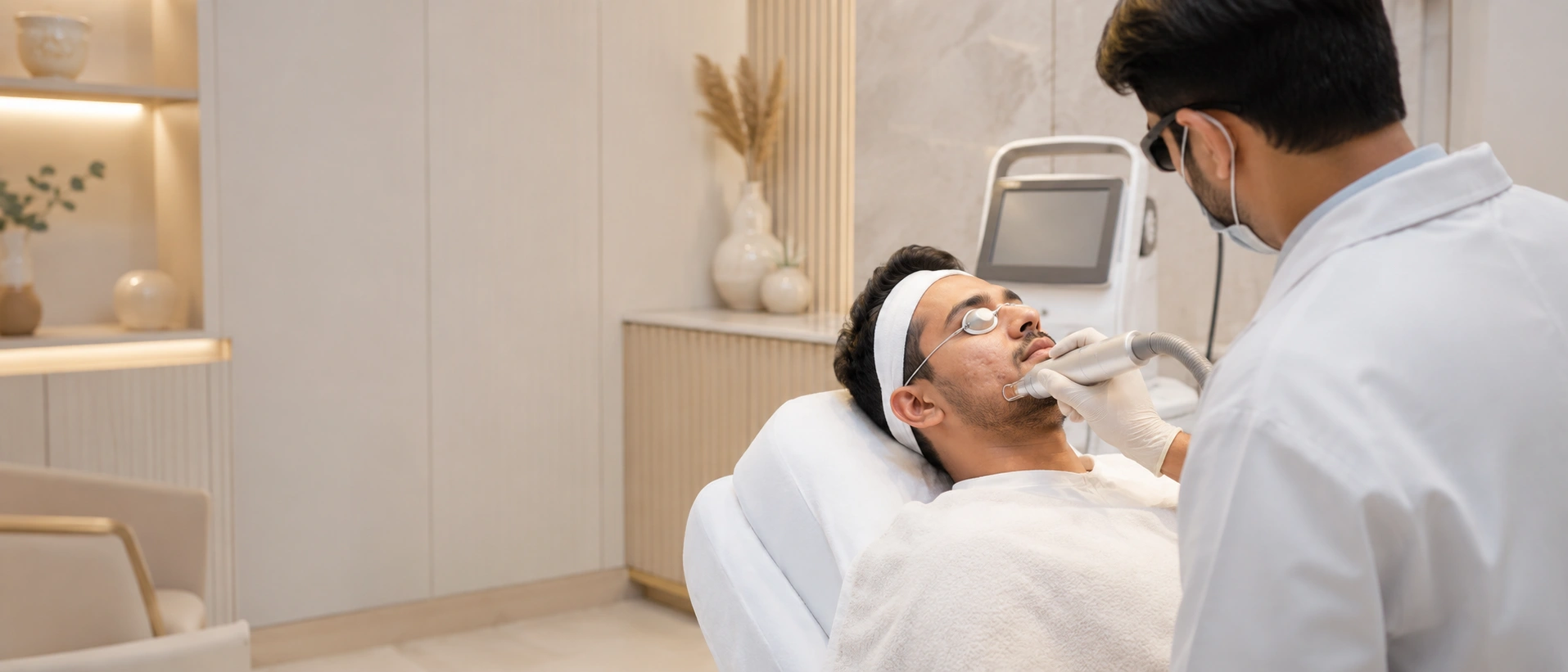
Fractional CO2 laser creates microscopic treatment columns in the skin while leaving surrounding areas untreated. The controlled injury stimulates remodeling and can improve selected boxcar and rolling scars, pores and texture. Downtime commonly includes redness, swelling, crusting and peeling.
Darker skin requires careful settings, pre-treatment assessment and post-treatment sun protection because post-inflammatory hyperpigmentation is a meaningful risk. Visit our fractional CO2 laser in Udaipur page.
Subcision
Subcision is designed for scars that are tethered downward by fibrous bands. A needle or cannula is passed under the scar to release these attachments. Bruising and swelling are common afterward. Some patients combine subcision with microneedling, laser or filler after appropriate healing.
TCA CROSS for Ice-Pick Scars
Chemical reconstruction of skin scars, commonly called TCA CROSS, places a strong acid carefully inside selected narrow scars to trigger localized remodeling. This is a targeted medical procedure and should not be confused with applying strong TCA over the entire face at home. Improper acid use can cause burns, pigmentation and scarring.
Chemical Peels
Superficial peels can improve post-acne pigmentation and mild texture, while stronger peels may have more significant effects and risk. Deep scars generally need more than a superficial peel. See our chemical peel in Udaipur page for general information.
Fillers for Acne Scars
Selected rolling or depressed scars can be elevated with injectable fillers. Fillers can provide relatively immediate contour improvement, but many are temporary and may require maintenance. They are not suitable for every scar location or type.
Punch Techniques
Very deep, sharply defined scars may be treated with punch excision, punch elevation or punch grafting in selected cases. These techniques replace one type of scar with a smaller controlled surgical scar that may later be blended with resurfacing.
PRP With Scar Procedures
Platelet-rich plasma is sometimes used as an adjunct with microneedling or laser procedures. Evidence varies according to protocol. PRP should not be presented as a stand-alone cure for deep structural scars.
How Many Sessions Will You Need?
There is no fixed answer. Mild scars may improve with a few sessions, while mixed or severe scars can require a staged series over many months. Each session produces gradual remodeling; aggressive treatment at short intervals can increase complications without improving the biological pace of healing.
What Results Are Realistic?
The goal of treatment is improvement, not perfectly poreless skin. Scar depth, age, location, skin thickness, genetics and treatment response all affect results. Patients usually see changes in shadowing, texture and scar edges rather than complete disappearance. Standardized before-and-after photographs are important for assessing progress objectively.
Acne Scar Treatment and Indian Skin
Indian skin tones can respond very well to scar procedures, but they may also develop post-inflammatory hyperpigmentation after excessive heat or inflammation. Treatment settings, interval, sunscreen use and pre/post-procedure skincare should therefore be individualized. More aggressive is not always better.
Why Sunscreen Matters
UV and visible light exposure can darken post-inflammatory pigmentation and make scars appear more noticeable. Broad-spectrum sunscreen is important throughout acne and scar treatment. It is particularly important after laser, peels and microneedling while the skin barrier is recovering.
Preparing for a Scar Procedure
- Control active inflammatory acne first.
- Tell the dermatologist about isotretinoin use and other medicines.
- Disclose a history of keloids or abnormal scarring.
- Avoid tanning and unnecessary sun exposure.
- Stop irritating home treatments when advised.
- Discuss herpes history if treatment is near the mouth.
- Plan around realistic downtime.
Aftercare
Aftercare depends on the procedure but usually emphasizes gentle cleansing, moisturizer, sun protection and avoidance of picking. Do not apply acids, scrubs, retinoids or strong actives until the dermatologist says the skin barrier has recovered. Picking crusts can increase pigmentation and scarring.
When Should Acne Be Treated Before Scars?
If new nodules, cysts or pustules are appearing regularly, acne control takes priority. Dermatologists may use topical medication, oral antibiotics, hormonal therapy or isotretinoin according to severity. Read our acne treatment guide for a complete overview.
Reliable Dermatology Guidance
The American Academy of Dermatology notes that acne scars come in different types and treatment is selected according to scar characteristics and skin. General patient information is available through the AAD acne scar treatment resource.
Frequently Asked Questions
Can acne scars disappear naturally?
Flat marks can fade, but established textural scars usually do not disappear completely without procedures.
Which is better: laser or microneedling?
Neither is universally better. The ideal treatment depends on scar type, depth, skin tone, downtime and previous treatment.
Can one CO2 laser session remove acne scars?
Significant improvement may occur, but one session rarely removes mixed or deep scars completely.
Can home derma rollers treat deep scars?
Home devices cannot reproduce medical treatment safely and can create infection, pigmentation or scarring if misused.
Acne Scar Treatment in Udaipur
Dermadent Clinic offers acne scar treatment in Udaipur using scar-type-based planning that may include microneedling, fractional CO2 laser, peels, subcision and other procedures. A consultation can identify which scars are realistically treatable and create a staged plan around your skin type and downtime.
This article is educational and does not replace personalised dermatology assessment.