Fractional CO2 Laser: Uses, Recovery, Risks and Acne Scar Benefits
Fractional CO2 laser is a resurfacing procedure used for selected acne scars, uneven texture, enlarged-looking pores, photoageing and certain skin concerns. It works by creating microscopic columns of controlled thermal injury while leaving surrounding skin untreated. Those untreated areas support healing, while the treated columns trigger collagen remodeling and surface renewal. The treatment can produce meaningful improvement, but it also involves visible downtime and must be used carefully in pigmentation-prone skin.
For patients considering fractional CO2 laser in Udaipur, the most important questions are not simply how strong the machine is or how many passes are used. Scar type, skin tone, recent tanning, acne activity, medical history and the selected laser settings strongly influence both results and risk. More aggressive treatment can create more inflammation and does not automatically produce a better outcome.
How Fractional CO2 Laser Works
CO2 laser energy is strongly absorbed by water in skin tissue. In fractional mode, the device delivers many microscopic treatment zones rather than removing the entire surface uniformly. Each treatment column triggers wound-healing signals and collagen remodeling. The untreated tissue between columns helps the skin recover faster than traditional fully ablative resurfacing.
What Can Fractional CO2 Laser Treat?
- Selected atrophic acne scars.
- Uneven skin texture.
- Fine lines in suitable patients.
- Photo-damaged skin.
- Some surgical or traumatic scars.
- Selected enlarged-pore appearance.
It is not appropriate for every scar or every pigmentation problem. Deep ice-pick scars and tethered rolling scars may require other procedures in combination.
Which Acne Scars Respond Best?
Boxcar and some rolling scars may respond well to fractional resurfacing because the laser can improve scar edges and stimulate collagen. Very deep ice-pick scars often need targeted techniques such as TCA CROSS or punch procedures. Rolling scars tethered to deeper tissue may first need subcision.
Read our acne scar types and treatment guide for a full comparison.
Fractional CO2 Laser vs Microneedling
| Factor | Fractional CO2 Laser | Microneedling |
|---|---|---|
| Energy | Thermal laser injury | Mechanical microchannels |
| Downtime | Usually more visible | Often shorter |
| Texture remodeling | Can be strong in suitable scars | Useful for mild-moderate texture |
| Pigmentation risk | Meaningful in darker skin if aggressive | Generally lower but still possible |
| Sessions | Depends on scar severity and settings | Usually a series |
What Happens During Treatment?
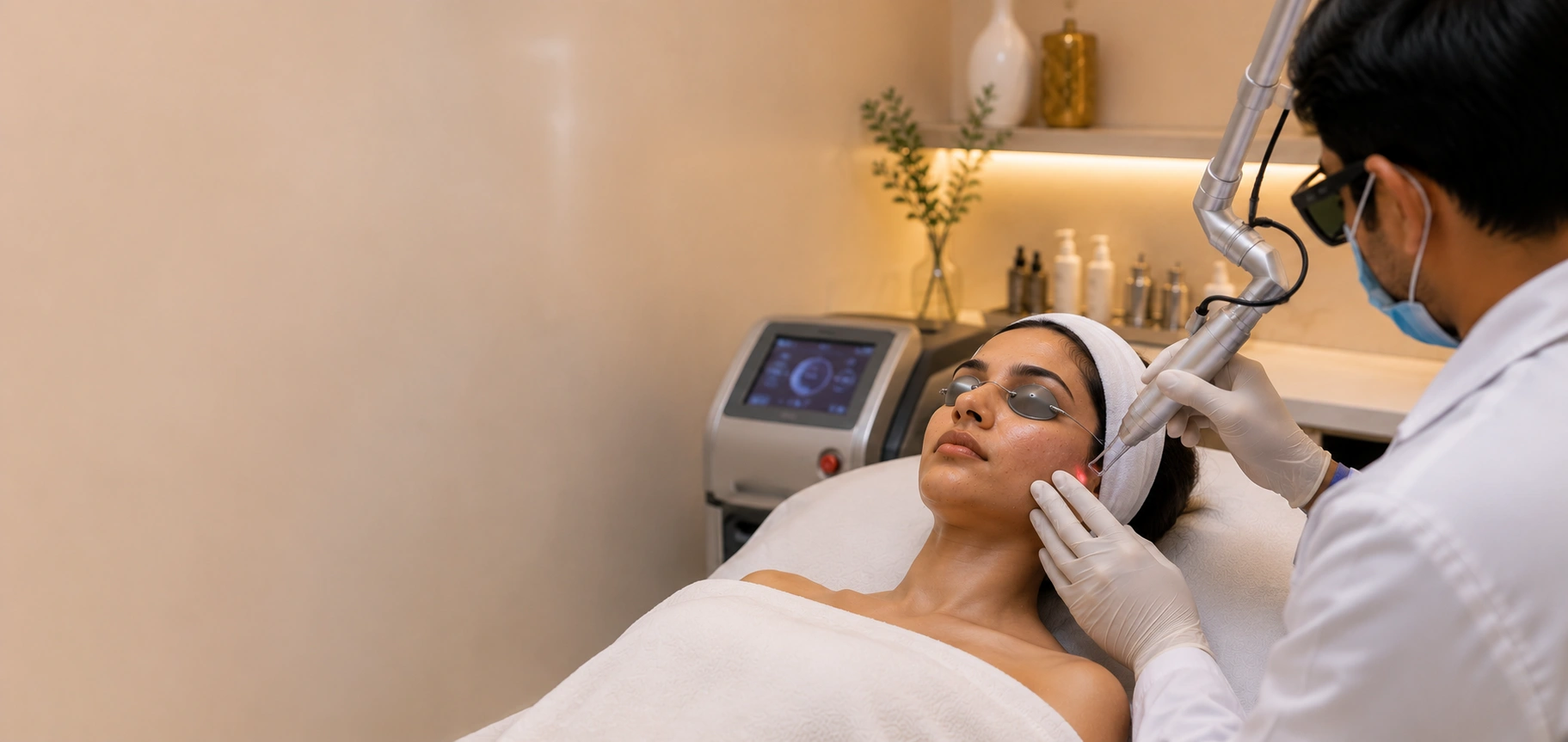
The skin is cleansed and topical anaesthetic is usually applied for a period before the laser session. The dermatologist selects treatment parameters according to scar depth, facial area and skin type. Laser passes are delivered systematically. Cooling or soothing measures may be used afterward.
The procedure can feel hot, prickly or stinging even with anaesthetic. Discomfort level depends on treatment intensity and individual sensitivity.
What Does the Skin Look Like Afterward?
Immediately after treatment, the skin can be red and swollen and may feel similar to a strong sunburn. Tiny brown dots or a grid-like texture can appear as the microscopic treatment zones heal. Over the next several days, dryness, roughness, crusting and peeling can occur.
Patients should not pick or scrub the surface. Forced removal of crusts can increase the risk of pigmentation and scarring.
Typical Recovery Timeline
| Time | Common Appearance | Care Focus |
|---|---|---|
| Day 1 | Redness, heat and swelling | Gentle cooling and prescribed aftercare |
| Days 2–3 | Swelling, roughness and dark microdots | Moisturize and avoid picking |
| Days 3–7 | Peeling/crusting gradually settles | Gentle cleansing and sun avoidance |
| 1–2 weeks | Residual pinkness may remain | Continue sunscreen and gentle skincare |
| Following months | Collagen remodeling continues | Assess improvement gradually |
When Will Acne Scar Results Appear?
Some texture change can be noticed after healing, but collagen remodeling continues over several months. Final judgment should not be made one week after treatment. Scar improvement is gradual, and multiple sessions or combination treatment may be needed.
How Many Sessions Are Needed?
There is no fixed number. Mild scars may require fewer treatments, while mixed moderate or severe scars often need a series. Treatment strength and interval should balance effectiveness with safe recovery. Repeated aggressive sessions too close together can increase complications.
Fractional CO2 Laser and Indian Skin
Indian skin can respond well to fractional CO2 laser, but the risk of post-inflammatory hyperpigmentation is higher than in very fair skin. Conservative settings, appropriate pre-treatment skincare, strict sun protection and adequate recovery time are especially important. A history of pigmentation after acne, burns or previous procedures should be discussed.
Risks and Side Effects
Expected short-term effects include redness, swelling, dryness and crusting. Potential complications include prolonged redness, post-inflammatory hyperpigmentation, temporary hypopigmentation, acne flare, milia, infection, herpes reactivation and, rarely, scarring. Risk is affected by treatment intensity and aftercare.
Who Should Delay Treatment?
Active skin infection, uncontrolled acne, recent heavy sun exposure, open wounds or an unstable skin condition may be reasons to postpone laser. Patients with a history of keloids, abnormal wound healing or certain medicines need individualized assessment. Pregnancy may also influence whether an elective cosmetic procedure is appropriate.
Fractional CO2 Laser After Isotretinoin
Tell the dermatologist if you currently take or recently used oral isotretinoin. Modern recommendations are more nuanced than older blanket waiting periods, but timing should still be based on procedure depth, dose, healing history and clinician judgment.
Preparing for the Procedure
- Avoid tanning and unnecessary sun exposure.
- Use sunscreen consistently.
- Stop irritating acids or retinoids when advised.
- Inform the dermatologist about medicines and supplements.
- Disclose herpes/cold sore history.
- Control active acne before scar resurfacing.
- Plan for several days of visible downtime.
Aftercare
Use only the cleanser, moisturizer or healing products recommended during the initial recovery period. Do not apply scrubs, exfoliating acids, retinoids or strong vitamin C to freshly treated skin until cleared. Avoid steam, saunas and intense exercise during early healing if advised.
Sun protection is essential after treatment. Read our sunscreen guide.
Can Fractional CO2 Laser Treat Melasma?
Melasma is generally not a straightforward indication for aggressive CO2 resurfacing. Heat and inflammation can worsen melasma in susceptible patients. Pigmentation should be diagnosed and treated with a melasma-specific plan rather than assuming stronger laser equals better lightening.
Fractional CO2 vs Chemical Peel
Chemical peels mainly create chemical exfoliation at varying depths, while CO2 laser creates controlled thermal micro-injury. Superficial pigmentation and mild acne may respond to peels; deeper textural scars may benefit more from resurfacing or combination procedures. Visit our chemical peel in Udaipur page for comparison.
Combination Acne Scar Treatment
Many patients achieve better outcomes from a staged combination: subcision for tethered scars, TCA CROSS for ice-pick scars, microneedling or MNRF for selected texture and fractional laser for resurfacing. The sequence should be designed around scar anatomy rather than using every procedure at once.
Reliable Dermatology Guidance
The American Academy of Dermatology notes that laser resurfacing and other acne-scar procedures should be selected according to scar type and patient characteristics. See the AAD acne scar treatment guidance.
Frequently Asked Questions
Does fractional CO2 laser remove scars completely?
No. The realistic goal is improvement in texture and scar visibility, not completely scar-free skin.
Is one session enough?
Some improvement may occur after one treatment, but moderate or mixed scars often require more than one session or combination therapy.
Can I go to work the next day?
Visible redness, swelling and crusting are common, so many patients prefer several days of social downtime.
Can darker skin undergo CO2 laser?
Yes, selected patients can, but settings and aftercare must be conservative because pigmentation risk is higher.
Fractional CO2 Laser in Udaipur
Dermadent Clinic provides fractional CO2 laser in Udaipur for selected acne scars and textural concerns. A dermatologist can assess scar type and decide whether laser alone or a combination with microneedling, subcision or another procedure is more appropriate.
This article is educational and does not replace personalised dermatology advice or procedure consent.