Laser Hair Reduction: Sessions, Results, Safety and What to Expect
Laser hair reduction is a medical aesthetic procedure used to reduce unwanted hair growth over time. It works by directing light energy toward pigment in the hair shaft and follicle. The absorbed energy produces heat that damages follicles capable of producing coarse pigmented hair. Because hair grows in cycles and not every follicle is active at the same time, treatment requires multiple sessions rather than one appointment.
For people considering laser hair reduction in Udaipur, device selection and settings matter, especially in Indian skin tones. Darker skin contains more epidermal melanin, which means the laser must be chosen and adjusted carefully so that enough energy reaches the hair while minimizing unnecessary heating of surrounding skin. A qualified provider should assess skin tone, hair colour, hair thickness, medical history and hormonal factors before treatment.
How Laser Hair Reduction Works
The principle is called selective photothermolysis. Laser energy is absorbed preferentially by melanin in the hair. That energy converts to heat and affects the follicular structures responsible for future growth. Coarse, dark hairs usually absorb more energy than very fine, light or grey hairs.
Because the laser depends on pigment contrast, white, grey and very blond hair typically responds poorly. Fine facial hair can also behave unpredictably, so a dermatologist should determine whether laser is appropriate for the area.
Why Multiple Sessions Are Needed
Hair follicles cycle through active growth, transition and resting phases. Laser is most effective when follicles are in the active growth phase and have enough pigment connected to the follicle. At any given time, only a portion of hairs are in that stage. Sessions are therefore spaced so different groups of follicles can be treated over time.
How Many Sessions Are Usually Required?
There is no exact universal number. Many people need a series of sessions, often followed by occasional maintenance. The total depends on body area, hormonal influences, hair thickness, skin tone, laser technology and individual response.
| Area | Typical Behaviour | Planning Consideration |
|---|---|---|
| Underarms | Often coarse and responsive | Usually good target for laser |
| Legs | Large area with slower cycles | Sessions may be spaced farther apart |
| Face/chin | Can be hormonally influenced | May need more sessions/maintenance |
| Bikini area | Often coarse and pigmented | Usually responds well when suitable |
| Back/chest | Density varies widely | Large treatment area |
Laser Hair Removal vs Laser Hair Reduction
The phrase “laser hair removal” is commonly used, but permanent elimination of every hair is not a realistic promise. Medical laser treatment is better described as long-term hair reduction. Many treated hairs become fewer, finer and slower growing, but maintenance can be needed.
Which Lasers Are Used?
Different wavelengths are used depending on skin tone and hair characteristics. Diode and long-pulsed Nd:YAG systems are commonly used in Indian skin. Nd:YAG penetrates more deeply and interacts less with epidermal melanin, which can make it useful in darker skin tones when properly operated.
The brand name alone does not guarantee safety. Settings, cooling, pulse duration, fluence and operator experience all influence results.
Is Laser Hair Reduction Safe for Indian Skin?
Yes, when performed with appropriate technology and conservative parameters. Indian skin can be prone to post-inflammatory hyperpigmentation after burns or excessive heat, so treatment should not be done with one fixed setting for every patient.
A test spot may be useful in certain patients, particularly when skin is tanned, sensitive or has reacted to previous laser procedures.
Does Laser Hair Reduction Hurt?
Patients often describe the sensation as brief heat, snapping or pinpricks. Cooling systems help reduce discomfort and protect the epidermis. Pain varies according to body area, hair density and device settings. Topical anaesthetic is not always necessary and should only be used as directed.
How to Prepare Before Laser
- Avoid waxing, threading or epilating the treatment area before sessions because the follicular target needs to remain present.
- Shave as instructed, commonly shortly before treatment.
- Avoid deliberate tanning and excessive sun exposure.
- Tell the clinician about medicines that increase photosensitivity.
- Disclose pregnancy, active skin infection and recent procedures.
- Do not bleach the hair immediately before treatment because pigment is needed as a target.
Why Shaving Is Allowed but Waxing Is Not
Shaving cuts hair at skin level while leaving the follicular structure in place. Waxing and threading pull the hair out from the root, temporarily removing the laser target. This is why shaving is generally compatible with laser schedules while root-removal methods are avoided between sessions.
What Happens During a Session?
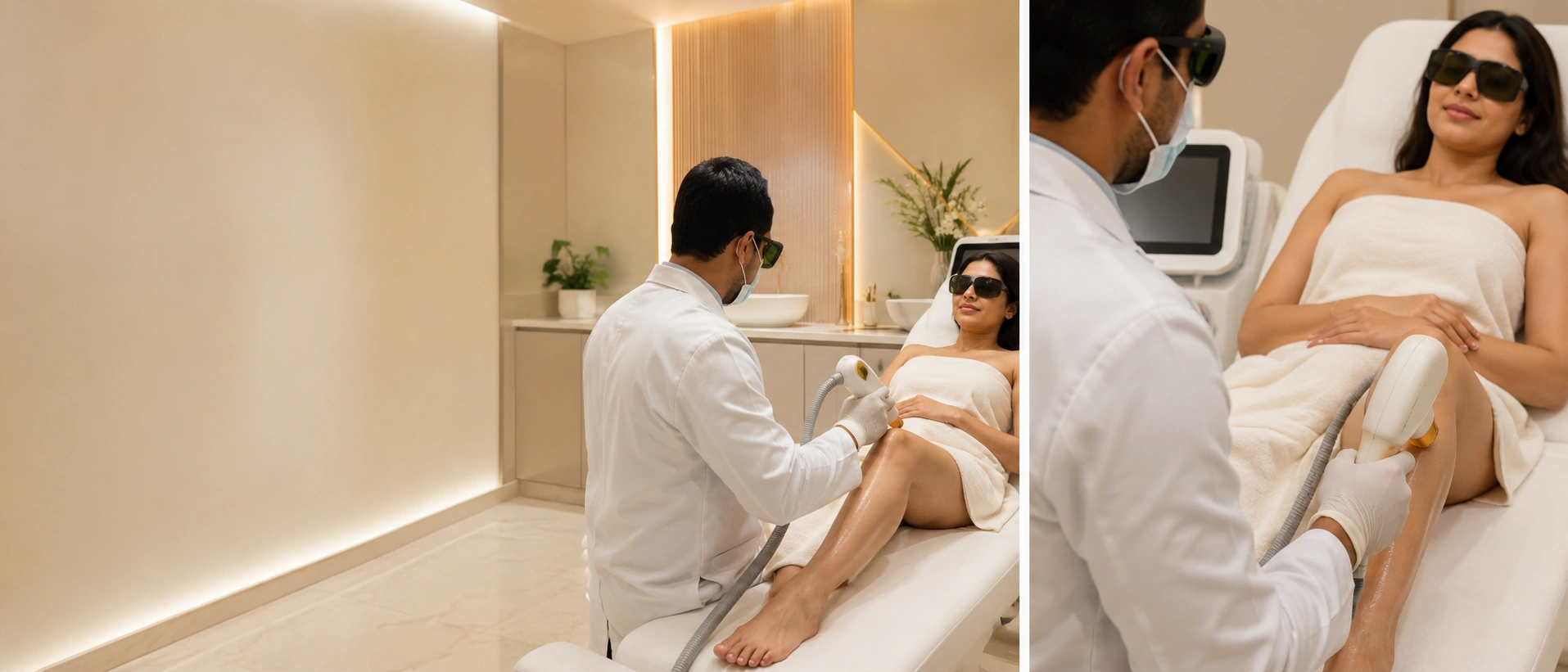
The skin is cleansed and protective eyewear is used. The device is adjusted according to skin and hair characteristics. Pulses are delivered across the planned area with cooling. After treatment, temporary redness or follicular swelling can occur and usually settles.
What Does Successful Treatment Look Like?
Hair does not usually vanish instantly. Treated hairs may appear to continue growing for several days and then shed from the follicles. Over subsequent sessions, the area should show reduced density, slower regrowth and finer remaining hairs.
Photographs taken at standardized intervals can help assess progress more objectively than checking immediately after each appointment.
Possible Side Effects
Temporary redness and perifollicular swelling are common. Less common complications include blistering, burns, crusting, post-inflammatory hyperpigmentation or hypopigmentation. Scarring is rare when treatment is properly performed but can occur after significant thermal injury.
Paradoxical Hair Growth
In some patients, particularly on the face and neck, low or inappropriate energy can be associated with paradoxical stimulation of fine nearby hairs. This is one reason facial laser treatment should be selected carefully and not used indiscriminately for every type of fine hair.
Hormonal Hair Growth
Women with increasing chin, jawline or body hair may have hormonal influences such as polycystic ovary syndrome. Laser can reduce visible hair but does not treat the underlying hormonal driver. Medical evaluation may be useful when excess hair is accompanied by irregular periods, acne or other signs of androgen excess.
Can Laser Be Done During Pregnancy?
Elective laser hair reduction is generally postponed during pregnancy because there is limited safety evidence and hair growth can change hormonally. Patients should discuss timing with their dermatologist and obstetric provider.
Aftercare
Use gentle skincare, avoid rubbing and protect treated skin from sun. Very hot showers, saunas, vigorous exercise or fragranced products may be restricted for a short period if the area is irritated. Follow the clinic’s specific instructions.
Broad-spectrum sunscreen is particularly important for exposed areas. Read our sunscreen guide for Indian skin.
Laser Hair Reduction vs Waxing
| Factor | Laser | Waxing |
|---|---|---|
| Effect | Progressive long-term reduction | Temporary removal |
| Sessions | Series plus possible maintenance | Repeated indefinitely |
| Hair needs | Works best on pigmented hair | Works on many hair colours |
| Ingrown hairs | May reduce them in suitable patients | Can sometimes contribute to irritation/ingrowns |
Reliable Dermatology Guidance
The American Academy of Dermatology provides patient information on laser hair removal, including preparation, expectations and safety. See the AAD laser hair removal FAQs.
Frequently Asked Questions
Can laser permanently remove all hair?
No. Long-term reduction is realistic, but some hair can persist or regrow and maintenance may be needed.
Can I shave between sessions?
Usually yes. Shaving does not remove the follicular target the way waxing or threading does.
Does laser make hair thicker?
Most suitable coarse hair becomes reduced and finer. Rare paradoxical stimulation can occur in certain areas, especially with inappropriate settings.
Can dark skin undergo laser hair reduction?
Yes, but device and settings must be chosen carefully to reduce burn and pigmentation risk.
Laser Hair Reduction in Udaipur
Dermadent Clinic offers laser hair reduction in Udaipur using skin- and hair-specific planning. A consultation can assess whether your hair type is a good laser target, estimate the treatment course and discuss hormonal or skin factors that may influence results.
This article is educational and does not replace personalised dermatology assessment or procedure consent.