Dentures vs Dental Implants: Which Tooth Replacement Option Fits Your Needs?
Missing teeth can affect chewing, speech, facial appearance and confidence. Two common replacement options are dentures and dental implants. Dentures are removable prostheses that replace several or all missing teeth, while dental implants are fixtures placed into the jawbone to support crowns, bridges or implant-retained dentures. The right choice depends on how many teeth are missing, bone availability, gum health, medical history, budget, maintenance preferences and expectations for stability.
For patients comparing dentures vs dental implants in Udaipur, it helps to understand that the options are not always mutually exclusive. Some people use traditional removable dentures, while others use a small number of implants to stabilize a removable denture. Patients with suitable bone and health may also choose a fixed implant-supported restoration.
What Are Dentures?
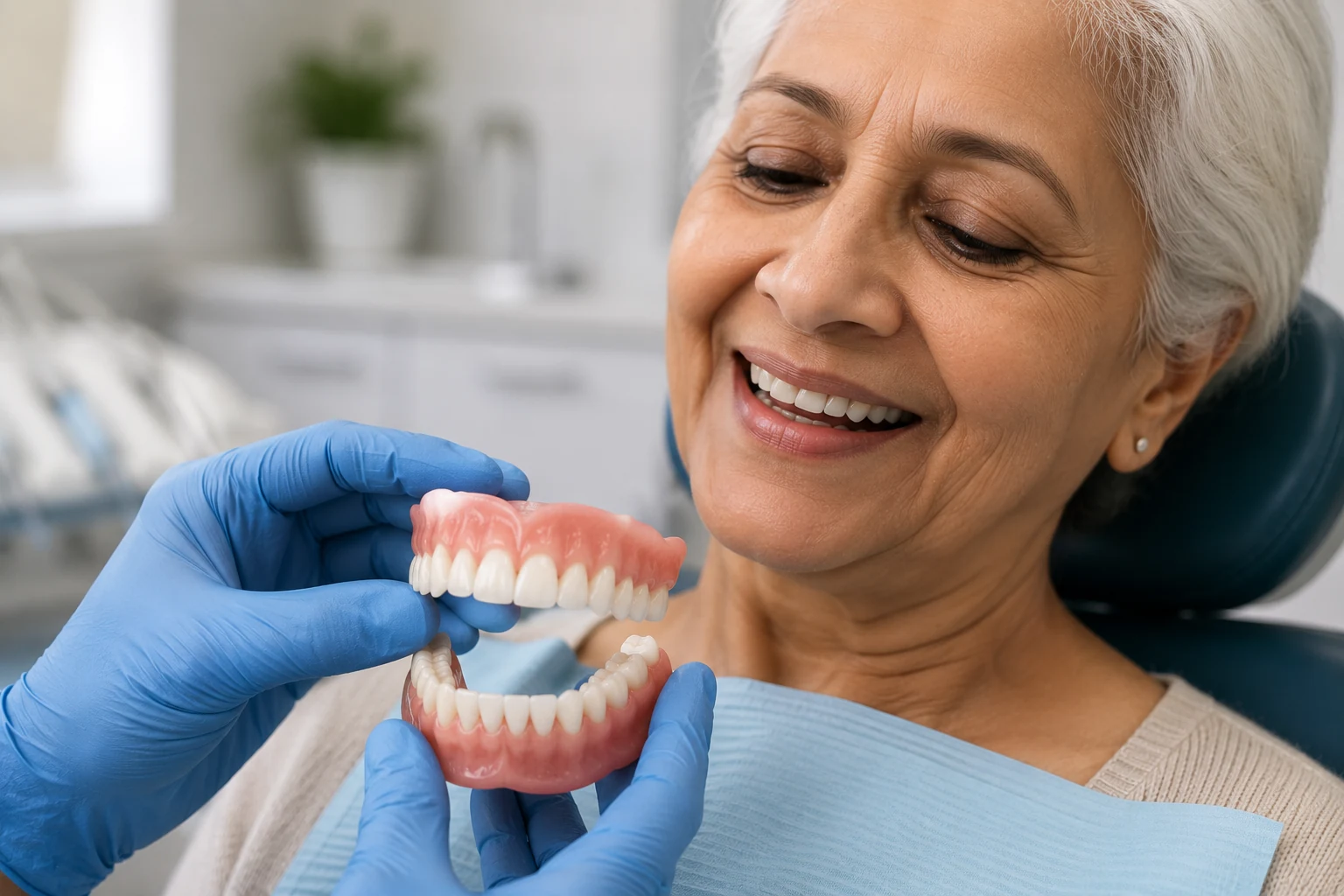
Dentures are removable replacements for missing teeth and surrounding gum tissue. Complete dentures replace an entire arch, while partial dentures replace several teeth and use the remaining teeth for support. Modern dentures can be designed to look natural, but they still rest on oral tissues and may move during chewing depending on anatomy and fit.
Visit our dentures in Udaipur page for treatment details.
What Are Dental Implants?
Dental implants are small fixtures surgically placed into the jawbone. After healing, they can support a single crown, bridge or denture. Because implants derive support from bone rather than only from the gums, they can provide greater stability for selected patients.
Learn more on our dental implants in Udaipur page.
Dentures vs Implants: Quick Comparison
| Factor | Dentures | Dental Implants |
|---|---|---|
| Type | Removable | Fixed or implant-supported removable |
| Surgery | Usually not required | Required |
| Bone requirement | Can often work with reduced bone | Adequate bone or grafting may be needed |
| Stability | Can move, especially lower complete dentures | Generally more stable |
| Treatment time | Often faster | Healing may take months |
| Cleaning | Removed and cleaned daily | Requires meticulous implant and prosthesis cleaning |
| Upfront cost | Usually lower | Usually higher |
Chewing Ability
A well-made denture can restore significant function, but it does not usually provide the same biting efficiency as natural teeth. Lower complete dentures can be particularly challenging because the tongue and floor of the mouth reduce the available support area.
Implant-supported teeth can improve stability and chewing confidence. However, implants are not indestructible; the prosthetic teeth can still wear, chip or require maintenance.
Comfort and Adaptation
New dentures often require an adaptation period. Patients may initially notice extra saliva, altered speech or pressure spots. Adjustments are common as the oral tissues settle. Over time, jawbone changes can make dentures looser and relining or replacement may be needed.
Implant-supported restorations often feel more stable, but surgery and healing are required. Some patients also need bone grafting before implant placement.
Bone Loss After Tooth Loss
Jawbone tends to shrink after teeth are removed because the bone no longer receives the same functional stimulation from tooth roots. Dentures do not stop this remodelling. Implants can help transfer functional load to bone in the implanted areas, although bone changes can still occur over time.
Who May Prefer Dentures?
- Patients who want a non-surgical replacement.
- People with medical conditions that make implant surgery unsuitable.
- Patients with significant bone loss who do not want grafting.
- People seeking a more affordable initial option.
- Patients who are comfortable with a removable prosthesis.
Who May Prefer Implants?
- Patients who want greater stability.
- People with adequate bone or who are willing to consider grafting.
- Patients able to maintain excellent oral hygiene.
- People seeking fixed replacement options where clinically appropriate.
- Patients who understand the surgical and maintenance requirements.
Implant-Retained Overdentures: A Middle Option
Some patients use two or more implants to retain a removable denture. The denture still comes out for cleaning but clips or attaches to implant components for better stability. This can be especially helpful for a lower complete denture that moves during eating or speaking.
Do Dentures Look Natural?
They can. Tooth shape, shade, arrangement, gum contour and lip support can be customized. A natural appearance often includes subtle variation rather than perfectly uniform bright-white teeth. Facial proportions and speech should be checked during the trial stage.
Do Dental Implants Look Natural?
A single implant crown can closely resemble a natural tooth when implant position, gum tissue and ceramic design are favorable. Front-tooth implants require particularly careful planning because gum contours and smile line strongly influence the result.
How Long Do Dentures Last?
Dentures do not last forever. Teeth wear, acrylic can fracture and jawbone changes alter fit. Even if a denture still looks acceptable, an old poorly fitting prosthesis can affect chewing and gum comfort. Regular review is important.
How Long Do Implants Last?
Many implants function successfully for years, but longevity is not guaranteed. Gum disease around implants, smoking, uncontrolled diabetes, heavy bite forces, poor hygiene and inadequate maintenance can contribute to complications. The crown or denture attached to an implant may require repair or replacement before the implant fixture itself.
Cleaning Dentures
Dentures should be removed and cleaned daily using appropriate methods. Oral tissues, tongue and any remaining teeth also need cleaning. Many patients are advised not to sleep in removable dentures unless a dentist has a specific reason for different instructions, because tissue rest and hygiene are important.
Cleaning Around Implants
Implants need daily plaque control around the gum line. Depending on the restoration, floss, interdental brushes, water flossers or special implant-cleaning aids may be recommended. Professional maintenance remains important because implants can develop inflammatory disease around the supporting tissues.
Cost Considerations
Dentures usually have a lower upfront cost, while implant therapy involves surgery, components and laboratory work. However, long-term comparisons should also consider relines, denture replacement, maintenance, repair and the number of implants required. A complete fixed implant restoration costs significantly more than a conventional denture.
What if You Have Only One Missing Tooth?
A full or partial denture is not always the first choice for a single missing tooth. A dental bridge or single implant crown may be more appropriate. Read our bridge vs implant comparison.
Medical Conditions and Implant Planning
Implant surgery requires assessment of medications, diabetes control, smoking status, bone health and other medical factors. Patients taking antiresorptive medicines or those with significant systemic conditions should provide a complete medical history before treatment.
Reliable Oral Health Guidance
The American Dental Association provides general patient education on replacing missing teeth and caring for dentures and implants through MouthHealthy.
Frequently Asked Questions
Can I switch from dentures to implants later?
Often yes, but bone volume and health need reassessment. Long-term denture wear can be associated with bone resorption, which may affect implant planning.
Can implants support my existing denture?
Sometimes an existing denture can be modified, but often a new prosthesis is designed for implant attachments. Suitability depends on its fit and structure.
Are dentures painful?
A new denture can create pressure spots during adaptation. Persistent pain should be adjusted by the dentist rather than tolerated.
Can elderly patients have implants?
Age alone does not automatically exclude implant treatment. General health, bone, medications and ability to maintain hygiene are more important.
Tooth Replacement Consultation in Udaipur
Dermadent Clinic can assess your missing teeth, bone levels, bite and treatment priorities and explain whether conventional dentures, implant-retained dentures, a bridge or fixed implant restoration is suitable. The best replacement is the one that balances function, oral health, maintenance requirements and your individual goals.
This article is for general education and does not replace an individual dental examination or treatment plan.