Hair Regrowth Treatments in Udaipur: An Evidence-Based Guide to Your Options
Hair regrowth is one of the most searched topics in dermatology, but the phrase can be misleading because not every type of hair loss can be “regrown” in the same way. Some conditions involve temporary shedding while follicles remain healthy. Others involve progressive miniaturisation, inflammation or scarring. A treatment that helps one condition may have little value for another.
For people comparing hair regrowth treatments in Udaipur, the best starting point is a diagnosis. A dermatologist can determine whether follicles are still viable, whether the problem is reversible, and whether treatment should focus on correcting a trigger, preserving existing follicles, stimulating growth or surgically redistributing hair.
Why Hair Loss Diagnosis Comes First
Common causes include androgenetic alopecia, telogen effluvium, alopecia areata, nutritional deficiency, thyroid disease, traction alopecia, scalp inflammation and scarring alopecia. These conditions differ in prognosis and treatment. Applying the same oil, supplement or procedure to every form of hair loss can delay effective care.
Evaluation may include scalp examination, family history, medication review and trichoscopy. Blood tests are selected when symptoms suggest iron deficiency, thyroid disease, nutritional problems or hormonal factors.
1. Minoxidil
Minoxidil is commonly used for male and female pattern hair loss. Topical formulations are applied directly to the scalp, while low-dose oral minoxidil may be prescribed to selected patients under medical supervision. It can support viable follicles and prolong the growth phase, but it does not create new follicles in long-standing bald skin.
Results take months, and consistent use is important. Temporary early shedding can occur. Learn more in our minoxidil hair loss guide.
2. Prescription Medical Treatment
Dermatologists may prescribe additional medicines for androgenetic alopecia depending on sex, age, medical history and pregnancy considerations. Some medicines modify androgen signalling and can help slow follicle miniaturisation. These are not suitable for everyone and require professional assessment because side effects and contraindications differ.
3. PRP Hair Treatment
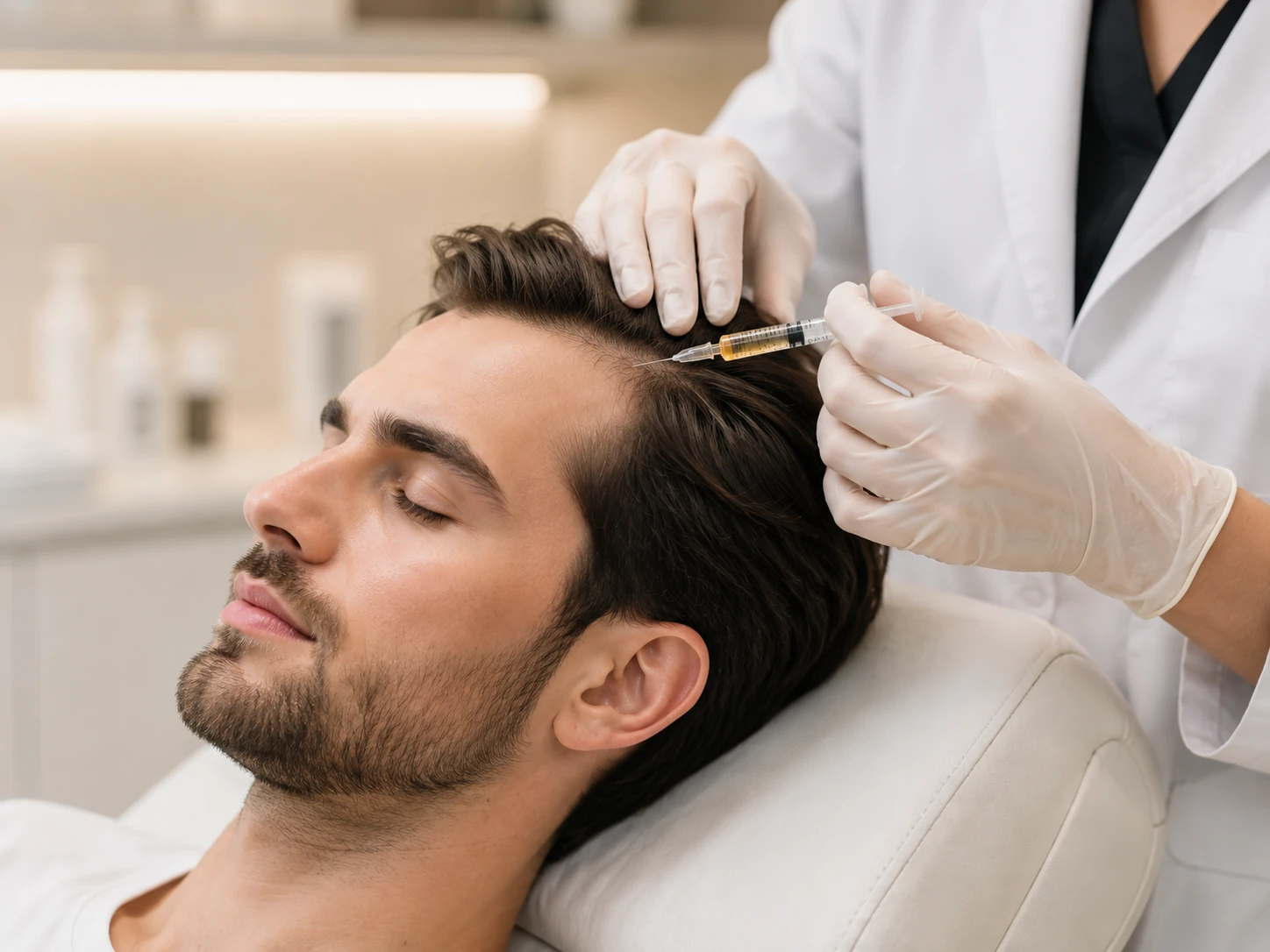
Platelet-rich plasma uses a concentrated component of the patient’s own blood. The prepared PRP is injected into thinning areas with the goal of supporting follicular activity. It is generally considered for selected patients who still have viable follicles.
PRP usually involves an initial series and possible maintenance. Response varies. For full details, visit our PRP hair treatment in Udaipur page.
4. Low-Level Light or Laser Therapy
Low-level light therapy uses specific wavelengths of light aimed at the scalp. Some devices are marketed for pattern hair loss, and evidence suggests selected patients may see modest improvement with consistent use. Results depend on device quality, diagnosis and adherence. It should be viewed as a supportive treatment rather than a guaranteed replacement for established medical therapy.
See our low-light laser therapy in Udaipur page for more information.
5. Correcting Nutritional Deficiency
Hair follicles require adequate protein, iron, zinc and other nutrients. A documented deficiency can contribute to shedding. Correcting that deficiency may support recovery. However, taking high-dose supplements when blood levels are normal does not automatically accelerate growth and can cause side effects.
Biotin is heavily marketed for hair, but true deficiency is uncommon. High-dose biotin can also interfere with certain laboratory tests. Supplements should be targeted, not random.
6. Treating Scalp Disease
Persistent dandruff, psoriasis, fungal infection, folliculitis or inflammatory disorders can affect scalp comfort and hair quality. Scalp treatment may include medicated shampoos, topical medicines or prescription therapy depending on diagnosis. Healthy hair growth is difficult to optimise if significant inflammation is left untreated.
Learn about scalp treatment in Udaipur.
7. Hair Transplantation
When follicles are permanently absent in an area but donor hair is available, hair transplantation may be considered. Follicles are relocated from the back or sides of the scalp to areas where coverage is needed. A transplant does not create additional follicles, so donor management and realistic design are essential.
Transplantation is most suitable for selected patients with stable or predictable patterns of loss. Visit our hair transplant in Udaipur page for procedure information.
Hair Regrowth Options Compared
| Treatment | Main Role | Best Considered For | Time to Judge |
|---|---|---|---|
| Minoxidil | Support growth phase | Pattern hair loss | Several months |
| Prescription anti-androgen treatment | Reduce hormonal miniaturisation in selected patients | Pattern hair loss | Several months |
| PRP | Regenerative support | Selected thinning hair | Several months |
| Low-level light therapy | Adjunctive stimulation | Selected pattern loss | Months of consistent use |
| Nutritional correction | Correct a deficiency | Deficiency-related shedding | Months after correction |
| Hair transplant | Relocate follicles | Established bald/thin zones | 9–12+ months |
What About Hair Oils?
Hair oils can reduce friction, improve shaft flexibility and make dry hair feel smoother. They do not reverse genetic follicle miniaturisation or regrow follicles destroyed by scarring. If you enjoy oiling and it does not aggravate dandruff or acne, it can be part of cosmetic hair care, but it should not replace evidence-based treatment when medical hair loss is present.
What About Onion Juice, Rosemary Oil and Home Remedies?
Some home remedies have small studies or anecdotal popularity, but evidence is much less established than for standard medical treatments. Essential oils can also cause irritation or allergy. Patients with progressive loss should not spend months relying solely on home remedies while follicles continue to miniaturise.
How Long Does Hair Regrowth Take?
Hair biology is slow. Even after a trigger is corrected or treatment begins, visible improvement may require three to six months or longer. New hairs initially emerge short and fine. Full cosmetic density takes additional time because the shafts must lengthen and thicken.
Monthly or quarterly photographs under the same conditions provide a more objective record than daily checking.
Can Hair Regrowth Treatment Fail?
Yes. No treatment guarantees a response. Failure may occur because the diagnosis is wrong, follicles are too advanced, treatment is inconsistent, an underlying trigger remains untreated, expectations are unrealistic or the patient simply does not respond biologically. A planned follow-up schedule helps identify when treatment should be adjusted.
How to Choose a Treatment
A sensible treatment plan answers four questions:
- What is the diagnosis?
- Are follicles still viable in the affected area?
- Is the loss active, stable or temporary?
- What outcome is realistic with the available treatments?
Only after these questions are answered does it make sense to compare medicines, PRP, devices or surgery.
Red Flags That Need a Dermatologist
- Sudden patchy hair loss.
- Scalp pain, burning or significant redness.
- Thick scale or pustules.
- Loss of eyebrows or body hair.
- Rapidly worsening density.
- Hair loss with fatigue, weight change or menstrual abnormalities.
- Visible scarring or shiny areas without follicle openings.
Evidence-Based Hair Loss Information
The American Academy of Dermatology advises that effective hair-loss treatment depends on the cause and that early evaluation can matter. General educational information is available through the AAD hair-loss treatment resources.
Frequently Asked Questions
What is the best treatment for hair regrowth?
There is no single best treatment for everyone. The best option depends on the diagnosis and whether follicles are still active.
Can bald areas grow hair again without surgery?
Areas with miniaturised follicles may respond to treatment. Long-standing smooth bald areas have less potential for non-surgical regrowth.
Is PRP better than minoxidil?
They work differently and may be used separately or together. Suitability depends on the individual case.
Do supplements regrow hair?
They can help when a genuine deficiency contributes to hair loss. Extra supplementation without deficiency does not guarantee regrowth.
Hair Regrowth Consultation in Udaipur
Dermadent Clinic offers assessment for hair regrowth treatment in Udaipur, including trichoscopy, medical therapy, PRP, scalp care and surgical planning where appropriate. The objective is to use the simplest effective treatment that matches the actual cause of hair loss.
This article is for educational purposes and does not replace medical consultation.