
Invisalign vs Braces: Which Orthodontic Treatment Is Better for You?
Invisalign-style clear aligners and traditional braces can both move teeth, but they do so with different systems and place different demands on the patient. Clear aligners use a planned sequence of removable trays. Braces use brackets bonded to the teeth and an archwire that applies controlled force. Neither is automatically “better” for every case. The best option depends on the type of tooth movement required, bite problem, age, oral hygiene, lifestyle, discipline and treatment goals.
For people comparing Invisalign vs braces in Udaipur, an orthodontic assessment is essential. Crowding, spacing, overbite, crossbite, open bite, rotated teeth and jaw relationships differ from one person to another. Digital scans and radiographs help determine whether clear aligners can predictably achieve the required movements or whether fixed braces offer more control.
How Invisalign Works
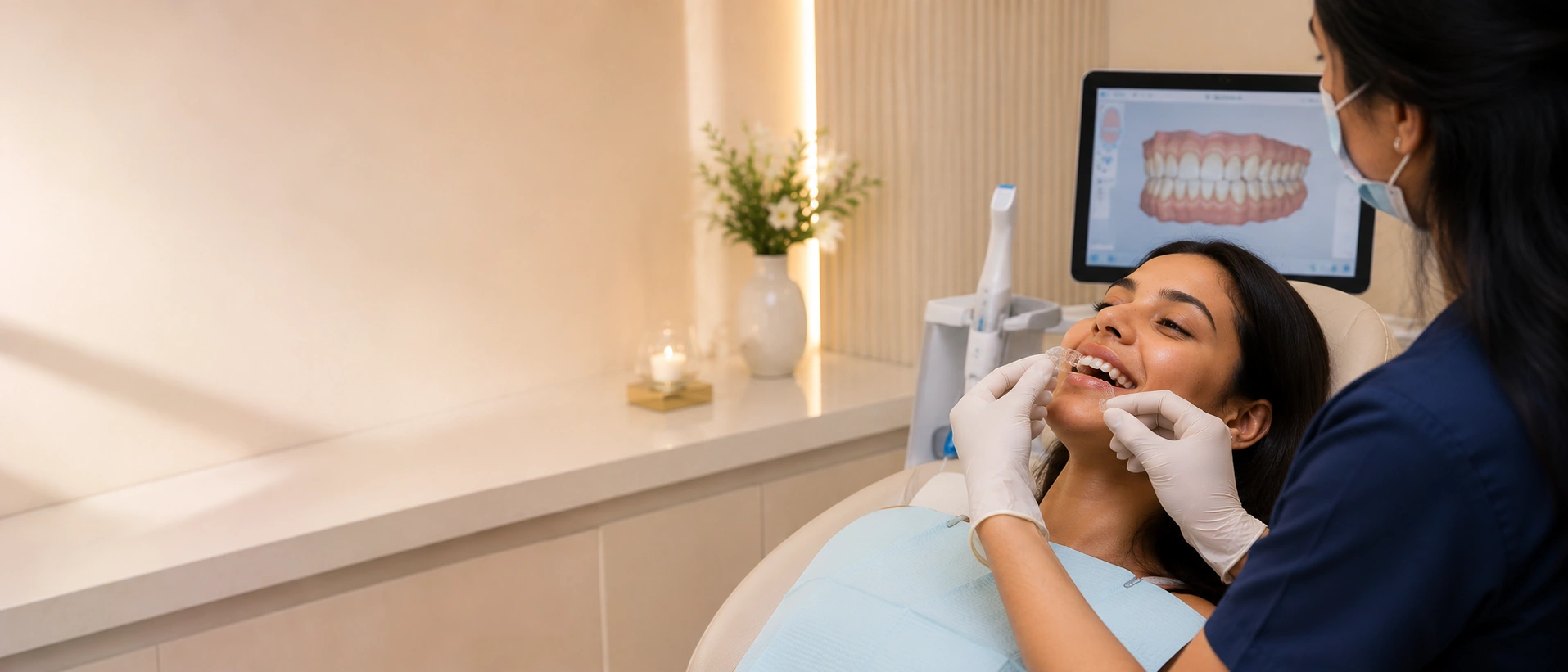
Clear-aligner treatment begins with records such as photographs, scans and X-rays. A digital treatment plan is created and a series of custom trays is manufactured. Each aligner is worn for the prescribed period before progressing to the next. Small tooth-coloured attachments may be bonded to certain teeth to improve grip and movement.
Aligners are removable, but this advantage comes with responsibility. They usually need to be worn for most of the day and night, removed mainly for meals, drinking anything other than water and oral hygiene. Inconsistent wear can delay progress or reduce accuracy.
How Braces Work
Traditional braces use brackets and wires attached to the teeth. The orthodontist adjusts the system over time to guide teeth into improved positions. Because the appliance remains in the mouth, treatment does not depend on remembering to wear trays. Fixed braces can provide very precise control for a wide range of tooth movements.
Modern braces may use metal or more aesthetic tooth-coloured components depending on the case and available system.
Invisalign vs Braces: Quick Comparison
| Factor | Clear Aligners | Braces |
|---|---|---|
| Appearance | Less noticeable | More visible |
| Removable | Yes | No |
| Eating restrictions | Few while trays are removed | Hard/sticky foods may need avoidance |
| Cleaning | Teeth can be brushed normally after removing trays | Requires cleaning around brackets and wires |
| Compliance | High patient discipline needed | Appliance works continuously |
| Complex movements | Suitable for many cases but not every movement | Often offers broad mechanical control |
| Emergency visits | Lost or cracked trays can interrupt treatment | Broken brackets/wires may need repair |
Which Looks Better?
Clear aligners are popular among adults and image-conscious teenagers because they are relatively discreet. However, attachments and elastics can still be visible at close range. Braces are more noticeable, although ceramic brackets can reduce visual contrast.
Aesthetic preference is important, but it should not override biological or mechanical suitability.
Which Is More Comfortable?
Both systems create pressure because teeth must move through bone. New aligners can feel tight for the first day or two of each stage. Braces may cause soreness after adjustments and can initially irritate the cheeks or lips. Wax and gradual adaptation often help.
Clear aligners have no protruding wire ends, but their edges and attachments can still cause temporary irritation. Comfort is therefore different, not necessarily completely pain-free.
Which Is Better for Oral Hygiene?
Aligners can be removed for brushing and flossing, which makes routine hygiene simpler. However, trays should not be placed over teeth covered in food debris or sugary liquid because the appliance can trap material against enamel.
Braces require more detailed cleaning. Interdental brushes, floss threaders or other tools may be recommended to clean around brackets and beneath wires. Poor plaque control during orthodontics can lead to gum inflammation, cavities or white-spot enamel lesions.
What Can You Eat?
Aligner patients remove trays for meals, so they can generally eat their usual foods. The trays should be stored safely rather than wrapped in tissue, where they are easily lost. Teeth should be cleaned before reinsertion when practical.
Patients with braces are usually advised to avoid very hard, sticky or chewy foods that can damage brackets and wires. Foods may also need to be cut into smaller pieces rather than bitten directly with front brackets.
Which Treatment Is Faster?
There is no universal winner. Treatment time depends on the complexity of the bite, number of movements, biological response and compliance. A simple case treated well with aligners may finish relatively quickly, while a complex case may take longer. Poor aligner wear can significantly extend treatment. Broken brackets and missed appointments can also delay braces.
Can Invisalign Treat Severe Crowding?
Many moderate and some complex crowding cases can be managed with aligners, especially with modern planning, attachments and auxiliaries. However, severe crowding, major bite discrepancies, significant rotations or movements requiring strong anchorage may be more predictable with braces or a hybrid approach.
An orthodontist should assess the complete bite rather than judging suitability from a front-facing photograph.
What Is IPR?
Interproximal reduction, or IPR, involves carefully removing a very small amount of enamel between selected teeth to create space. It may be used in aligner or fixed orthodontic treatment. It is performed in controlled amounts and is not necessary in every case.
Do Aligners Need Attachments?
Often yes. Attachments are small tooth-coloured shapes bonded to enamel. They act like handles so the aligner can apply force more effectively. Their number and position depend on planned tooth movements.
Braces and Elastics
Braces may be combined with elastics to correct bite relationships. Aligners can also use elastics. Patient cooperation remains important even with fixed appliances because elastics, hygiene and appointment attendance affect results.
What Happens After Orthodontic Treatment?
Both aligners and braces require retention. Teeth naturally tend to shift after active movement. Retainers help maintain the new position while supporting tissues adapt. Retention may involve removable retainers, bonded wires or a combination, and long-term wear is commonly recommended.
Cost Factors: Invisalign vs Braces
Fees depend on case complexity, treatment duration, appliance system, number of aligners, refinements, records and follow-up. A mild alignment case should not be compared directly with a complex bite correction. The most useful quotation is one based on a complete orthodontic diagnosis.
Who May Prefer Clear Aligners?
- Adults who want a discreet appliance.
- Patients who can reliably wear trays as instructed.
- People who value removable appliances for meals and hygiene.
- Patients whose orthodontic movements are suitable for aligner mechanics.
Who May Prefer Braces?
- Patients who do not want responsibility for removable trays.
- Children or teenagers likely to lose aligners.
- People with certain complex movements or bite corrections.
- Patients comfortable with a fixed appliance.
Invisalign and Braces Service Pages
For treatment-specific information, visit our pages on Invisalign treatment in Udaipur and braces in Udaipur.
Orthodontic Health Matters Beyond Appearance
Straighter teeth can be easier to clean in some cases, but orthodontic treatment is also about bite function, tooth relationships and long-term stability. Cosmetic alignment without proper bite assessment can miss problems that affect wear or retention.
The American Dental Association provides general information on orthodontics and oral health through its patient resource MouthHealthy.
Frequently Asked Questions
Can I drink coffee with aligners?
It is generally best to remove aligners for drinks other than water because colour and sugar can stain trays or increase cavity risk. Follow your orthodontist’s instructions.
Do braces damage teeth?
Braces themselves are not intended to damage teeth. Poor cleaning around brackets can lead to decalcification or cavities, which is why hygiene is critical.
Can adults get braces?
Yes. Healthy teeth and gums can often be moved at many adult ages, although treatment planning may differ from that of growing patients.
Are clear aligners invisible?
They are less noticeable than metal braces but are not completely invisible, especially when attachments or elastics are used.
Orthodontic Consultation in Udaipur
Dermadent Clinic can assess your bite, crowding, spacing and aesthetic goals and explain whether clear aligners, braces or another orthodontic approach is most appropriate. The aim is not simply to choose the appliance you prefer, but to use the appliance that can predictably deliver the required tooth movements while protecting oral health.
This article is educational and does not replace an orthodontic examination or personalised treatment plan.