Laser Skin Tightening: How It Works, Who It Suits and What Results Are Realistic
Laser and energy-based skin tightening treatments are designed to improve mild to moderate skin laxity without surgical lifting. Depending on the device, controlled heat is delivered into deeper skin layers to contract collagen fibres and stimulate gradual collagen remodeling. The treatments can improve firmness and texture in selected patients, but they do not reproduce the degree of lifting possible with surgery and should not be marketed as a replacement for a facelift in people with significant sagging.
For patients considering laser skin tightening in Udaipur, the first step is to identify whether the main concern is true laxity, loss of facial volume, wrinkles, pigmentation or skin texture. These problems can look similar in photographs but require different treatments. A dermatologist can assess skin thickness, age-related changes, facial anatomy and expectations before recommending an energy device.
How Skin Loses Firmness
Collagen and elastin provide structural support to the skin. With age, collagen production slows and existing fibres become fragmented. Sun exposure accelerates this process. Facial fat compartments and bone structure also change over time, so loose skin is only one part of facial ageing. Weight loss, genetics, smoking and hormonal changes can further influence laxity.
How Laser Skin Tightening Works
Energy-based devices heat selected layers of tissue to a therapeutic temperature while protecting the surface. Heat can cause immediate contraction of existing collagen and stimulate a longer wound-remodeling response. New collagen develops gradually over weeks and months, which is why results are progressive rather than instant.
Some devices use infrared laser energy, while others use radiofrequency or ultrasound rather than true laser. The term “laser tightening” is often used broadly in advertising, so patients should ask which technology is actually being used.
Laser vs Radiofrequency vs Ultrasound
| Technology | Energy Type | Typical Target | Key Point |
|---|---|---|---|
| Infrared/laser | Light converted to heat | Dermal collagen | Device-specific depth and cooling matter |
| Radiofrequency | Electrical energy converted to heat | Dermis/subcutaneous tissue depending on device | Works independently of pigment target |
| Microneedling RF | Needles deliver RF beneath surface | Dermal remodeling | Useful for texture and selected laxity |
| Focused ultrasound | Acoustic energy | Deeper tissue layers | Can target deeper structural planes |
Who Is a Good Candidate?
The best candidates generally have mild to moderate laxity and realistic expectations. Someone noticing early softness along the jawline, mild neck looseness or reduced cheek firmness may see improvement. Patients with severe jowls, heavy excess skin or substantial tissue descent may be better served by a surgical consultation.
Which Areas Can Be Treated?
- Jawline.
- Lower face.
- Neck.
- Cheeks.
- Selected areas around the eyes with appropriate devices.
- Abdomen or body areas in certain protocols.
Treatment suitability depends on device approval, anatomy and skin condition.
What Happens During a Session?
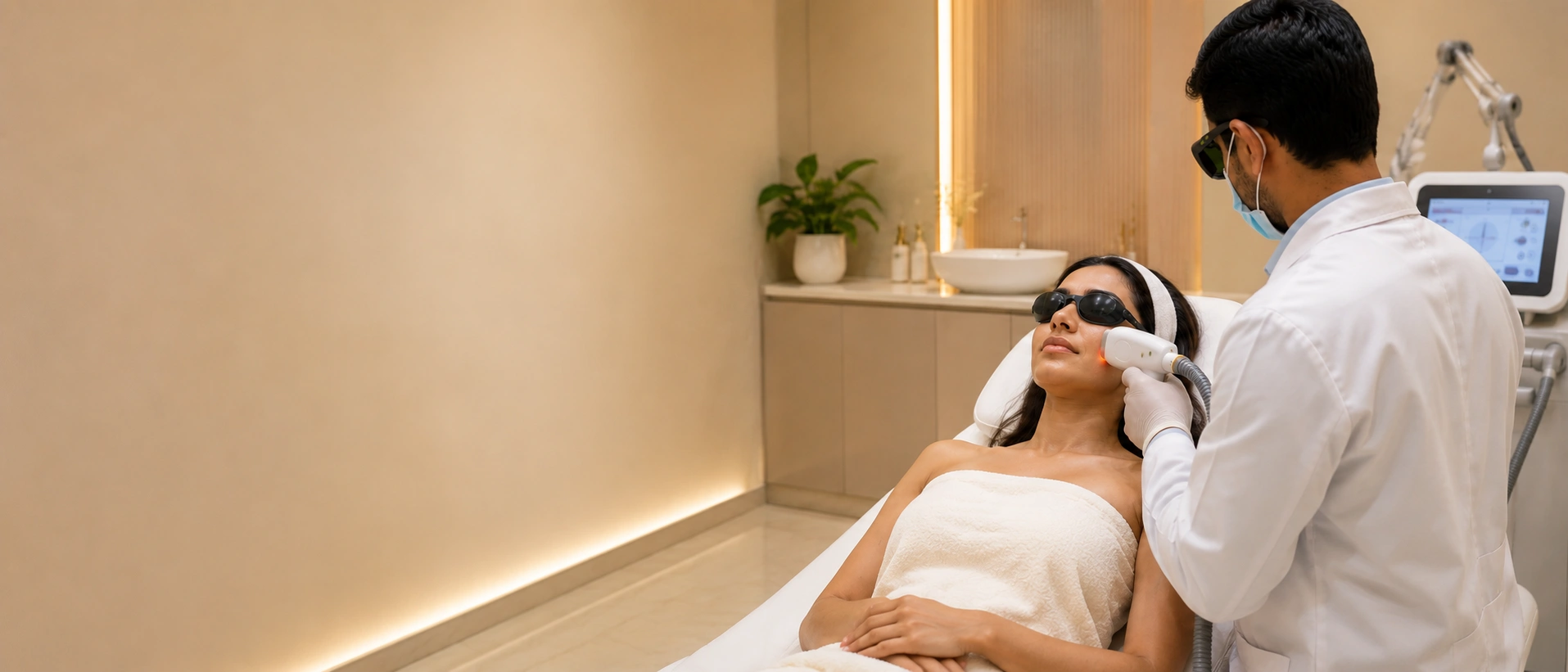
The skin is cleansed and the treatment area marked when needed. Cooling gel or a device-specific interface may be used. Energy is delivered in controlled passes while temperature and skin response are monitored. Patients often feel repeated warmth or brief heat pulses.
Topical anaesthetic is not required for every device. Higher-intensity or needle-based treatments may use anaesthesia to improve comfort.
Does Laser Skin Tightening Hurt?
Comfort varies considerably between devices. Non-invasive systems may feel like repeated deep warmth, while radiofrequency microneedling can feel sharper and generally requires numbing cream. Strong pain should be communicated during treatment so settings can be checked.
How Many Sessions Are Needed?
Some devices are designed for one higher-intensity treatment, while others use a series of lower-intensity sessions. The number depends on technology, degree of laxity and individual response. Maintenance may be considered because natural ageing continues after treatment.
When Do Results Appear?
Temporary tightness can occur soon after treatment from swelling or immediate collagen contraction, but the meaningful biological result develops over several weeks to months as collagen remodeling occurs. Patients should not judge the final outcome the next morning.
How Much Tightening Is Realistic?
Non-surgical tightening produces subtle to moderate improvement rather than dramatic surgical lifting. Photographs taken with the same lighting, facial expression and camera angle are important because small changes can be exaggerated by different photography.
A responsible treatment plan should explain the expected degree of improvement before payment rather than promising “10 years younger” results.
Skin Tightening vs Dermal Fillers
Tightening devices target skin quality and collagen, while fillers replace volume or support contours. A hollow cheek or deep fold caused mainly by volume loss will not necessarily improve with tightening alone. Conversely, adding filler to genuinely loose skin may make the face look heavier if volume is not the primary problem.
Skin Tightening vs Botox
Botulinum toxin reduces muscle movement that creates dynamic expression lines. It does not directly tighten loose skin. Energy devices and botulinum toxin can address different ageing components and may be combined in selected patients.
Laser Tightening vs Fractional CO2 Laser
Fractional CO2 laser is primarily a resurfacing treatment used for texture, scars and photoageing. It can stimulate collagen and create some tightening, but it has more surface downtime than many non-ablative tightening devices. If acne scars are the main concern, visit our fractional CO2 laser in Udaipur page.
MNRF for Tightening
Microneedling radiofrequency delivers heat beneath the surface through fine needles. It can improve selected acne scars, texture and mild laxity. Downtime is generally shorter than aggressive ablative laser but greater than some non-invasive tightening devices.
See our MNRF treatment in Udaipur service page.
Risks and Side Effects
Temporary redness, warmth, swelling and tenderness are common. Depending on technology, possible complications include burns, blisters, post-inflammatory hyperpigmentation, temporary numbness, fat loss in unintended areas or scarring. Proper device selection, energy settings and operator training reduce avoidable risk.
Skin Tightening and Indian Skin
Non-ablative technologies can be suitable for Indian skin, but any device that creates inflammation or heat can potentially trigger pigmentation. Recent tanning, melasma and a history of post-inflammatory hyperpigmentation should be discussed. Sun protection remains important before and after treatment.
Who Should Delay Treatment?
Active skin infection, open wounds, severe dermatitis, recent tanning or uncontrolled inflammatory skin disease may require postponement. Pregnancy can affect whether an elective cosmetic procedure is appropriate. Patients with implanted medical devices should inform the clinician because certain radiofrequency technologies may be contraindicated.
Preparing for Treatment
- Use sunscreen consistently.
- Avoid deliberate tanning.
- Tell the dermatologist about all medicines and supplements.
- Disclose previous fillers, threads, implants or facial surgery.
- Stop irritating skincare when instructed.
- Arrive with clean skin according to clinic guidance.
Aftercare
After non-invasive tightening, most patients can resume normal activities quickly. Use gentle skincare and sun protection and avoid excessive heat while the skin is flushed or sensitive. More intensive or needle-based procedures have specific aftercare and may require a few days of visible redness or swelling.
Can Skincare Tighten Loose Skin?
Retinoids and sunscreen can support collagen quality and reduce photoageing over time, but creams cannot physically lift substantial sagging skin. They are valuable for prevention and maintenance but should not be compared with procedural tightening or surgery.
How to Choose a Clinic
Ask for the exact device name and technology, who will perform treatment, expected number of sessions, realistic improvement and potential complications for your skin type. Avoid clinics that refuse to discuss limitations or claim every patient will achieve a surgical-level lift.
Reliable Dermatology Guidance
The American Academy of Dermatology provides general patient information about non-invasive skin tightening and cosmetic procedures, including the importance of realistic expectations and qualified treatment. See its skin tightening guidance.
Frequently Asked Questions
Is laser skin tightening permanent?
No. Collagen remodeling can create lasting improvement, but natural ageing continues and maintenance may be needed.
Can it remove a double chin?
Skin tightening and fat reduction are different goals. If submental fullness is caused mainly by fat, another treatment may be required.
Can tightening devices replace a facelift?
Not for significant laxity. Non-surgical devices offer more modest improvement.
How soon can I wear makeup?
After non-invasive treatment, makeup may be possible quickly, but timing varies by technology and skin response.
Laser Skin Tightening in Udaipur
Dermadent Clinic offers laser skin tightening in Udaipur and related energy-based treatments for suitable patients. A consultation can determine whether your concern is primarily laxity, volume loss, texture or pigmentation and choose the treatment accordingly.
This article is educational and does not replace personalised dermatology assessment or informed consent.