
Wisdom Tooth Removal: When It Is Needed, Procedure and Recovery Tips
Wisdom teeth, also called third molars, are the last permanent teeth to develop at the back of the mouth. Some erupt normally and never cause trouble. Others remain partly or fully trapped under the gum or bone, grow at an angle, repeatedly become inflamed or damage the tooth in front. Wisdom tooth removal is therefore not automatically necessary for every adult; the decision should be based on symptoms, position, disease risk and dental imaging.
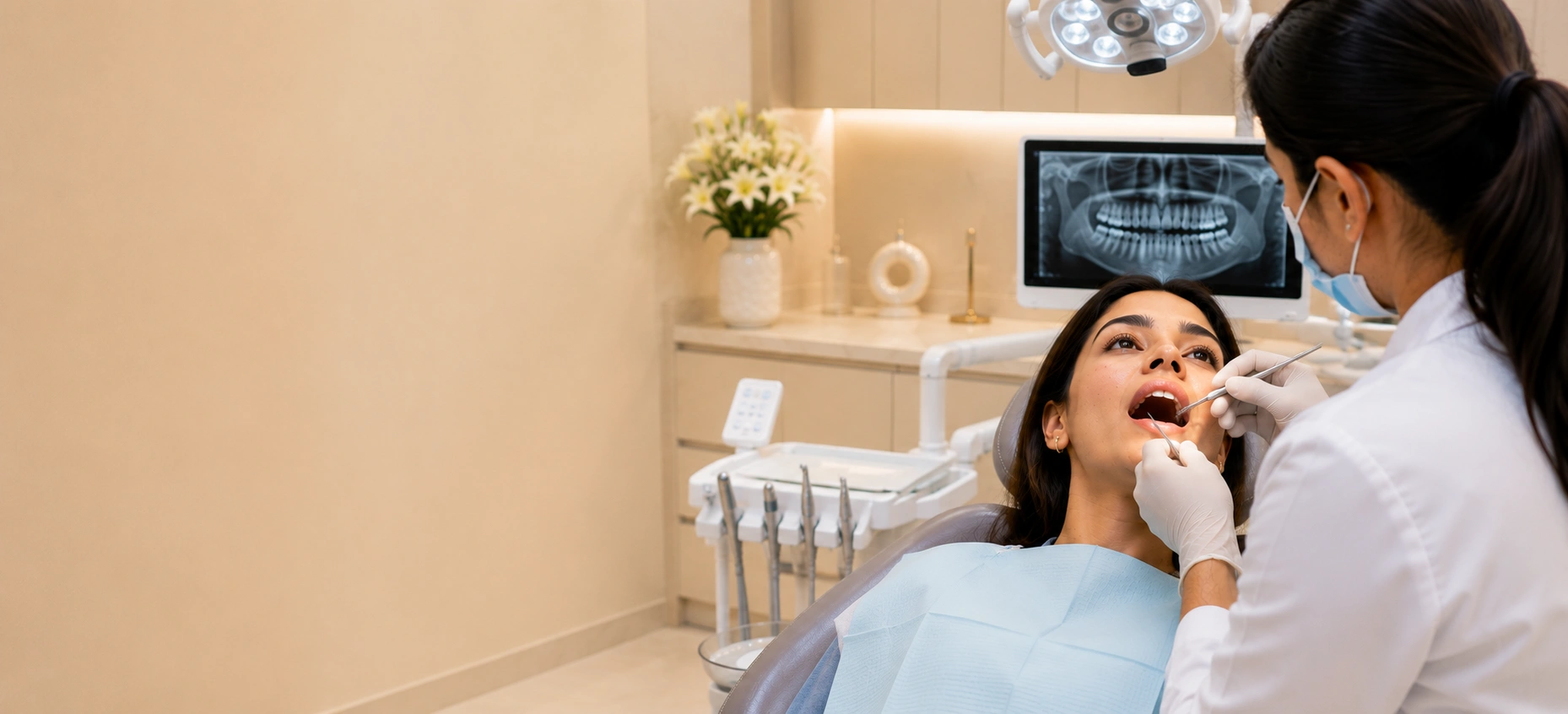
For people searching for wisdom tooth removal in Udaipur, an oral examination and X-ray usually come first. The dentist or oral surgeon assesses whether the tooth is erupted, partially impacted or fully impacted, how close the roots are to important structures, whether there is decay or infection and whether neighbouring teeth are affected.
When Does a Wisdom Tooth Need Removal?
Extraction may be recommended when a wisdom tooth repeatedly causes pain, gum infection, food trapping, decay, cystic change, damage to the adjacent second molar or other problems. A partially erupted lower wisdom tooth can create a gum flap where plaque and food collect, leading to recurrent pericoronitis.
Common Signs of a Problem Wisdom Tooth
- Pain or pressure at the back of the jaw.
- Swollen or tender gum behind the second molar.
- Difficulty opening the mouth during infection.
- Bad taste or discharge from the area.
- Food repeatedly getting trapped around a partly erupted tooth.
- Decay in the wisdom tooth or tooth immediately in front.
- Recurrent cheek biting from an awkwardly positioned tooth.
Facial swelling, fever, difficulty swallowing or spreading infection requires prompt dental assessment.
What Does “Impacted Wisdom Tooth” Mean?
An impacted wisdom tooth cannot erupt into a normal functional position because it is blocked by bone, gum or another tooth. Impactions may be vertical, angled forward, angled backward or nearly horizontal. The amount of bone covering the tooth also varies.
Position affects surgical complexity. A deeply buried lower wisdom tooth can be close to the inferior alveolar nerve, while an upper tooth may be near the maxillary sinus.
Why an X-Ray Is Important
A panoramic radiograph is commonly used to evaluate wisdom teeth. It shows tooth angulation, root shape, neighbouring teeth and surrounding anatomy. In selected cases, three-dimensional CBCT imaging may be recommended when the relationship to a nerve or other structure needs closer assessment.
What Happens During Wisdom Tooth Removal?
- Assessment: Medical history, medications, allergies and imaging are reviewed.
- Anaesthesia: Local anaesthesia is used; additional sedation options may be discussed for selected patients.
- Access: For an impacted tooth, a small gum incision may be made and a limited amount of bone removed.
- Sectioning: The tooth may be divided into smaller pieces to remove it more conservatively.
- Cleaning: The socket is inspected and irrigated.
- Closure: Stitches may be placed when needed.
- Aftercare: Gauze, medicines and written instructions are provided.
Learn more on our wisdom tooth removal in Udaipur service page.
Is Wisdom Tooth Surgery Painful?
Local anaesthesia is intended to prevent sharp pain during the procedure. Pressure, pushing and vibration can still be felt. After the anaesthetic wears off, soreness and swelling are expected. Pain usually peaks during the early recovery period and then gradually improves.
Wisdom Tooth Recovery Timeline
| Time | What May Happen | Care Priority |
|---|---|---|
| First 24 hours | Bleeding, soreness and early swelling | Gauze pressure, rest, avoid vigorous rinsing |
| Days 2–3 | Swelling may peak | Medicines, hydration and soft food |
| Days 3–7 | Pain and swelling should begin improving | Gentle cleaning and follow instructions |
| 1–2 weeks | Soft tissue continues healing | Gradual return to normal diet |
| Following weeks | Socket fills in gradually | Keep area clean as advised |
What Is Dry Socket?
Dry socket, or alveolar osteitis, is a painful complication that occurs when the protective blood clot in an extraction socket is lost or breaks down before adequate healing. Pain often becomes significantly worse a few days after extraction and may radiate toward the ear or temple. The socket can appear empty and may have an unpleasant taste or smell.
Smoking is a known risk factor. Vigorous rinsing, spitting or disturbing the socket too early can also interfere with clot stability. Dry socket needs dental treatment for pain relief and local care; it is not something to ignore.
What Should You Eat?
Choose cool or lukewarm soft foods during the early period: yogurt, soft rice, khichdi, mashed vegetables, eggs, smoothies taken without a straw and other easy-to-chew foods. Avoid very hot, sharp, hard or crumbly foods that can irritate the socket. Gradually return to a normal diet as comfort improves.
Why Avoid a Straw?
Strong suction may disturb the blood clot during early healing. Many dentists therefore advise avoiding straws and forceful spitting after extraction. Follow the exact duration provided by your surgeon.
Brushing After Wisdom Tooth Removal
You still need oral hygiene, but the surgical site should be treated gently. Brush the rest of the mouth as instructed and avoid aggressive contact with the socket initially. Salt-water rinses or prescribed mouth rinses may be introduced at the time recommended by the dentist.
Possible Risks
Most wisdom tooth extractions heal uneventfully, but risks include bleeding, infection, dry socket, temporary jaw stiffness, swelling, damage to neighbouring teeth, sinus communication in upper molars and altered sensation if lower-jaw nerves are affected. Nerve injury is uncommon but can be temporary or, rarely, persistent.
What Is Coronectomy?
When a lower wisdom tooth’s roots are extremely close to the inferior alveolar nerve, an oral surgeon may in selected cases discuss coronectomy. This involves removing the crown while intentionally leaving the roots in place to reduce nerve-injury risk. It is not suitable for every tooth and requires careful case selection.
Do All Impacted Wisdom Teeth Need Preventive Removal?
No. Some symptom-free wisdom teeth can be monitored if they are healthy and can be adequately reviewed. The decision depends on age, tooth position, hygiene access, disease risk and whether pathology is already present. Regular dental review matters because a patient may not feel early decay or damage behind the second molar.
When to Contact the Dentist After Surgery
- Bleeding that does not settle with firm pressure.
- Pain that becomes much worse after initial improvement.
- Swelling that continues increasing after several days.
- Fever, pus or foul discharge.
- Difficulty breathing or swallowing.
- Persistent numbness or altered sensation that concerns you.
- Vomiting or inability to take prescribed medicines.
Wisdom Tooth Removal vs Simple Tooth Extraction
A fully erupted wisdom tooth may be removed similarly to another tooth. An impacted tooth may require surgical access, bone removal and sectioning, which can increase recovery time and complexity. This is why a quote or timeline should ideally follow examination and imaging.
Reliable Dental Guidance
The American Dental Association’s patient resource explains common reasons wisdom teeth may need removal and the importance of professional assessment. See MouthHealthy wisdom-teeth information.
Frequently Asked Questions
How many wisdom teeth can be removed at once?
Several can sometimes be removed in one appointment, but the best plan depends on complexity, health, anaesthesia and recovery considerations.
When can I return to work?
Many people return after a few days, but physically demanding work or complex surgery may require more recovery time.
Can wisdom teeth cause crowding?
The relationship between wisdom teeth and front-tooth crowding is more complex than simply saying the teeth “push everything forward.” Extraction decisions should be based on actual disease and orthodontic considerations.
Do stitches need removal?
Some stitches dissolve; others require removal. Your surgeon will tell you which type was used.
Book Wisdom Tooth Removal in Udaipur
Dermadent Clinic provides examination, imaging-based planning and wisdom tooth removal in Udaipur. For more complex cases, appropriate oral-surgery planning helps protect neighbouring teeth, bone and important anatomical structures.
This article is educational and does not replace a clinical examination, X-ray or individual surgical advice.