Teeth Whitening: Clinic vs Home Whitening, Safety and Expected Results
Teeth whitening is one of the most requested cosmetic dental treatments because stains can make otherwise healthy teeth look dull or yellow. Professional whitening and home whitening products both aim to lighten tooth colour, but they differ in strength, supervision, speed, predictability and risk of misuse. Whitening is also not suitable for every type of discolouration, and it does not change the colour of crowns, veneers or fillings.
For patients considering teeth whitening in Udaipur, a dental examination before treatment is useful. Cavities, gum inflammation, exposed roots, cracked teeth or severe sensitivity may need attention first. The dentist can also identify whether the discolouration is likely to respond to bleaching or whether another cosmetic treatment would be more appropriate.
Why Teeth Become Yellow or Stained
Tooth colour is influenced by enamel thickness, underlying dentine, age and genetics. External stains can build up from tea, coffee, tobacco, red wine and strongly coloured foods. Internal discolouration may result from trauma, certain medications, developmental conditions or changes within a tooth after the nerve dies.
Surface polishing can remove some external stain, while bleaching changes the colour of natural tooth structure. This distinction explains why a cleaning alone may not create the shade change a patient expects.
How Professional Teeth Whitening Works
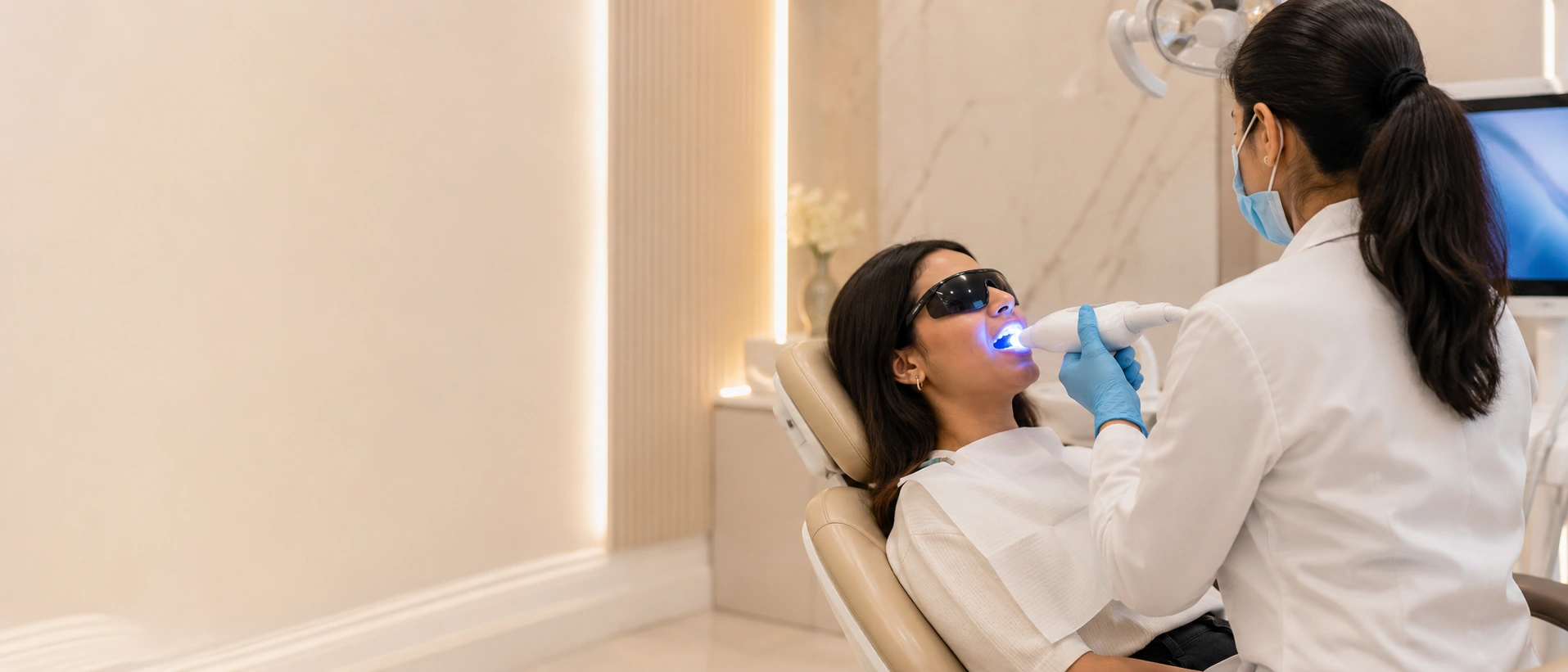
Professional whitening uses peroxide-based agents under controlled conditions. In-office systems generally use stronger formulations than over-the-counter products, with measures taken to protect the gums and soft tissues. The dentist may apply the whitening gel in one or more cycles and monitor the response.
Some clinics use light or other activation systems depending on the product protocol. The core whitening effect comes from the bleaching chemistry rather than simply from the lamp itself.
Home Whitening Options
Home approaches include dentist-provided custom trays, whitening strips, gels and certain toothpastes. Dentist-supervised trays use a planned concentration and fit closely around the teeth. Over-the-counter strips and gels vary in strength and design.
Whitening toothpastes primarily help remove surface stain through abrasives or polishing agents; they generally do not create the same chemical shade change as peroxide bleaching.
Clinic vs Home Whitening
| Factor | Professional Clinic Whitening | Home Whitening |
|---|---|---|
| Speed | Usually faster visible change | Usually gradual |
| Supervision | Dentist evaluates teeth and gums | Varies; OTC use may be unsupervised |
| Strength | Higher professional concentrations may be used | Generally lower concentrations |
| Control | Soft tissues can be protected | Technique depends on user |
| Sensitivity management | Can be adjusted during treatment | User may need to stop or modify use |
| Cost | Higher upfront fee | Often lower per product |
What Results Can You Expect?
Whitening response varies. Natural yellowish teeth often respond better than some grey or deeply intrinsic stains. The starting shade, enamel characteristics, age and source of discolouration all influence the final result. A responsible dentist cannot promise the same shade for every patient.
The goal should be a natural improvement rather than an artificial “paper white” colour that may not be achievable or appropriate.
Does Whitening Damage Enamel?
When evidence-based whitening products are used correctly, tooth bleaching is generally considered safe for appropriate patients. Problems are more likely when highly concentrated products are misused, treatment is repeated excessively or unregulated chemicals are applied to the teeth.
Do-it-yourself recipes involving acids such as lemon juice can erode enamel. Abrasive powders used aggressively can also increase surface wear. Whitening should not involve intentionally damaging enamel to make teeth appear brighter.
Why Does Whitening Cause Sensitivity?
Temporary sensitivity is one of the most common effects. Peroxide can move through enamel and dentine and temporarily increase nerve sensitivity. Patients may notice short sharp responses to cold air or drinks. Sensitivity often settles after treatment pauses or finishes.
Dentists may recommend sensitivity toothpaste, fluoride or a modified schedule in patients who are prone to discomfort.
Can Gum Irritation Occur?
Yes. Whitening gel that contacts the gums can cause temporary whitening, burning or irritation of the soft tissues. Professional isolation and properly fitting trays reduce unnecessary exposure. If home gel repeatedly leaks onto the gums, the tray fit or amount of material may need adjustment.
Who Should Delay Whitening?
- Patients with untreated cavities or leaking restorations.
- People with active gum disease.
- Patients with severe unexplained sensitivity.
- Anyone with cracked or damaged teeth that require treatment first.
- People whose desired shade change involves crowns or veneers rather than natural teeth.
- Pregnant or breastfeeding patients should discuss elective cosmetic treatment timing with their dentist and medical team.
Whitening Does Not Change Crowns, Veneers or Fillings
Dental ceramics and composite restorations do not bleach like natural teeth. If front teeth contain restorations, whitening first may create a mismatch. A dentist can plan the sequence so that any new visible restorations are matched to the post-whitening shade.
Patients considering major aesthetic changes can also read about porcelain veneers in Udaipur and cosmetic dentistry.
How Long Do Whitening Results Last?
Whitening is not permanent. Tea, coffee, tobacco, strongly coloured foods and natural ageing can gradually darken teeth again. Good oral hygiene and moderation of staining habits can extend the result. Some patients choose occasional dentist-approved maintenance rather than repeating strong whitening frequently.
What to Eat After Whitening
You do not need to fear every coloured food, but following the dentist’s product-specific instructions is sensible. During the immediate period after treatment, patients may be advised to limit tobacco and strongly staining foods or drinks. Rinsing with water after tea or coffee and maintaining regular brushing can help reduce stain accumulation.
Teeth Whitening vs Dental Cleaning
A professional cleaning removes plaque, calculus and some surface stains. Whitening changes the shade of natural tooth structure through bleaching. If teeth mainly look darker because of external stain and tartar, cleaning may create a noticeable improvement even before whitening is considered.
Can Whitening Fix a Single Dark Tooth?
A single tooth that turns grey or brown after trauma may need an X-ray and vitality testing. If the nerve has died, root canal treatment may be required. Internal bleaching or a restoration can then be considered depending on the case. Treating one dark tooth is different from general whitening of an entire smile.
How to Choose a Safe Whitening Product
Use products from reputable manufacturers and follow the instructions exactly. Avoid buying unusually strong bleaching chemicals from unverified online sources. More concentration does not automatically mean a better result; it can mean more sensitivity or tissue irritation.
The American Dental Association provides patient guidance about tooth whitening, including professional and home approaches. See the ADA MouthHealthy whitening resource.
Common Whitening Myths
“Charcoal permanently whitens teeth.”
Charcoal products may remove some surface stain through abrasion, but they do not offer the same predictable bleaching action as peroxide systems and excessive abrasion can be undesirable.
“Lemon and baking soda are safe natural whiteners.”
Acid can erode enamel, and aggressive abrasive mixtures can damage tooth surfaces.
“Whitening makes every tooth equally white.”
Teeth can respond differently because of restorations, internal stains and natural variation.
“If a little gel works, more works faster.”
Using excess gel increases soft-tissue exposure and does not guarantee a better outcome.
Frequently Asked Questions
How many shades can teeth become lighter?
The result varies by patient and whitening system. Exact shade promises should be avoided until the starting colour and stain type are assessed.
How often can I whiten?
Frequency should depend on the product, sensitivity and dental condition. Repeated unsupervised whitening is not recommended.
Can sensitive teeth be whitened?
Often yes, but the dentist may use a modified concentration, shorter exposure or desensitising approach.
Is whitening toothpaste enough?
Whitening toothpaste can help control surface stain but typically creates less intrinsic shade change than peroxide bleaching.
Book Teeth Whitening in Udaipur
Dermadent Clinic offers dental assessment and teeth whitening in Udaipur for suitable patients. A consultation can determine whether your discolouration is best managed with cleaning, whitening, internal bleaching or another cosmetic treatment.
This article is for general education and does not replace an individual dental examination.