HydraFacial vs Chemical Peel: Which Facial Treatment Is Right for Your Skin?
HydraFacial-style treatments and chemical peels are both used to improve skin appearance, but they work in different ways and are suited to different concerns. A HydraFacial typically combines cleansing, controlled exfoliation, suction-based extraction and hydration. A chemical peel applies a selected acid to create controlled exfoliation at a chosen depth. One is often chosen for gentle refreshment and hydration, while the other may be more targeted for acne, pigmentation or texture depending on the peel used.
For patients comparing HydraFacial vs chemical peel in Udaipur, the right choice depends on skin type, active acne, pigmentation, sensitivity, upcoming events and tolerance for downtime. Neither treatment should be selected simply because it is trending on social media. A dermatologist can assess whether your main problem is clogged pores, dullness, post-acne marks, melasma, rough texture or barrier damage and recommend the more appropriate approach.
What Is a HydraFacial?
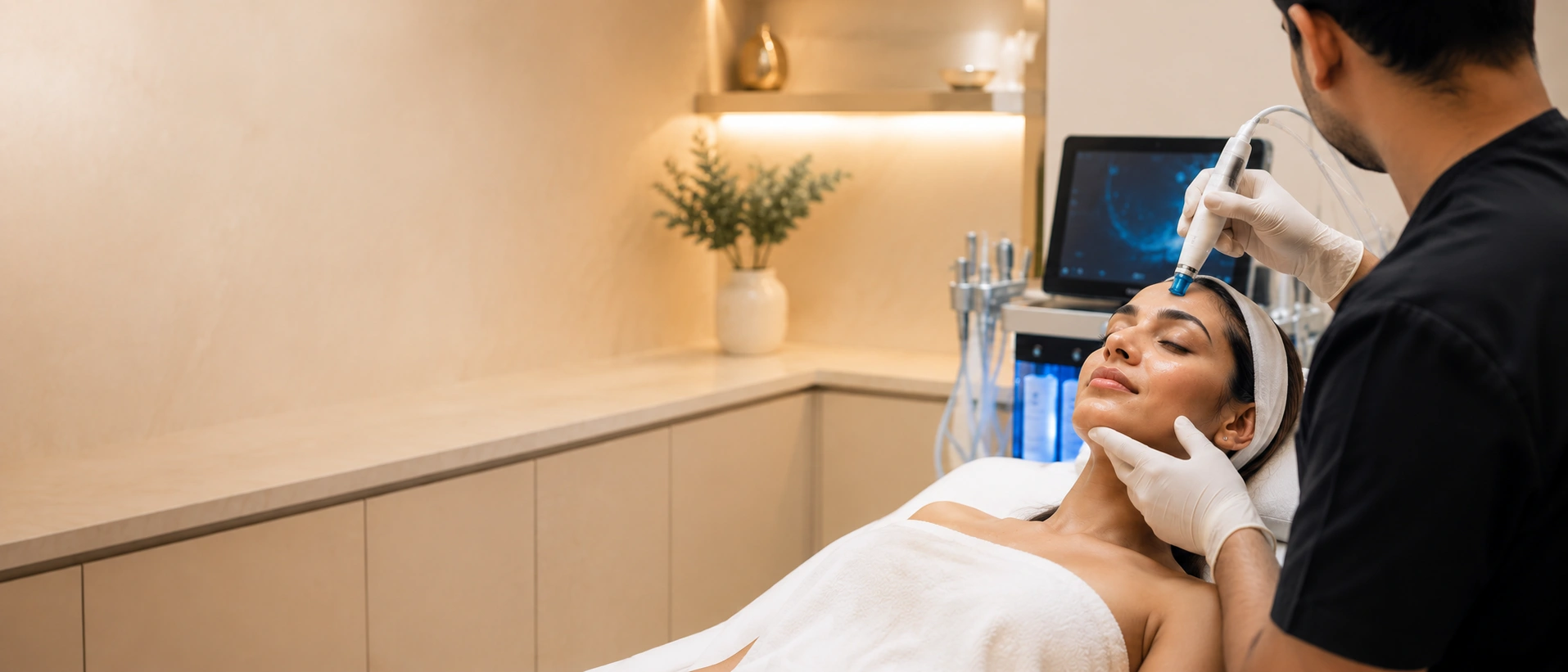
HydraFacial is a device-based facial treatment that commonly includes several steps: cleansing, exfoliation, gentle acid application, suction-assisted extraction and delivery of hydrating serums. The exact protocol can vary by clinic and skin concern. Many patients choose it because there is generally little visible downtime and the skin may feel smoother and more hydrated immediately afterward.
Learn more about HydraFacial treatment in Udaipur.
What Is a Chemical Peel?
A chemical peel uses an acid such as glycolic, salicylic, lactic, mandelic or trichloroacetic acid to create controlled exfoliation. The agent, concentration and application time determine the depth and biological effect. Peels range from superficial treatments with minimal downtime to stronger medical procedures that require more healing.
See our detailed chemical peel in Udaipur service page.
HydraFacial vs Chemical Peel: Quick Comparison
| Factor | HydraFacial | Chemical Peel |
|---|---|---|
| Main approach | Cleansing, extraction and hydration | Controlled chemical exfoliation |
| Typical downtime | Minimal | Varies from minimal to several days |
| Immediate glow | Often noticeable | May develop after peeling settles |
| Clogged pores | Can help through extraction | Salicylic and other peels may help comedones |
| Pigmentation | Limited to supportive brightening | Selected peels can target superficial pigmentation |
| Hydration | Major focus | Not the main purpose |
| Acne scars | Limited effect on true scars | Superficial peels have limited scar effect; stronger or targeted methods may help selected scars |
Which Is Better for Dull Skin?
If the main goal is short-term smoothness, hydration and removal of surface debris, HydraFacial can be a practical option. The treatment is often chosen before events because downtime is limited. A superficial chemical peel can also brighten dull skin, but visible dryness or flaking may occur depending on the acid and strength.
Which Is Better for Acne?
It depends on the acne type. HydraFacial extraction may help some clogged pores, but squeezing or suction does not treat all biological drivers of acne. Salicylic or other acne-focused peels can reduce comedones and oiliness, but moderate or severe inflammatory acne usually needs a medical treatment plan.
Patients with painful cysts, nodules or scarring should start with our acne treatment guide and dermatologist assessment rather than relying on facials alone.
Which Is Better for Blackheads?
HydraFacial may physically remove some superficial debris from pores through controlled suction. Chemical peels containing salicylic acid can help normalize pore blockage over time. The best choice may combine good home skincare with periodic professional treatment instead of repeated aggressive extraction.
Which Is Better for Pigmentation?
Chemical peels generally offer more targeted options for superficial pigmentation than HydraFacial. Glycolic, lactic, mandelic and other peels may be selected depending on the pigmentation type and skin tone. However, melasma is a chronic condition and should not be treated with repeated strong peels without a broader plan.
Sun protection and topical treatment remain central. See our pigmentation and melasma treatment guide.
Which Is Better for Sensitive Skin?
Neither treatment is automatically safe for every sensitive skin condition. Someone with active eczema, rosacea flare, dermatitis or a damaged barrier may need to delay both. A very gentle HydraFacial protocol may be tolerated by some sensitive patients, while a carefully selected mild peel may work for others. The key is diagnosis and reduced treatment intensity.
Can HydraFacial Treat Acne Scars?
HydraFacial can improve temporary smoothness and hydration but does not release tethered rolling scars or rebuild deep boxcar and ice-pick scars. True structural scars usually need procedures such as microneedling, subcision, fractional laser or targeted chemical techniques.
Read about acne scar treatment in Udaipur.
Can Chemical Peels Treat Acne Scars?
Superficial peels mainly improve marks, mild texture and comedones. Deep scars usually need more specialized procedures. TCA CROSS is a targeted chemical technique for selected ice-pick scars and should be performed medically because strong acid can cause burns and pigmentation if misused.
How Much Downtime Should You Expect?
HydraFacial generally has little downtime. Mild temporary redness can occur, especially after extraction. Superficial chemical peels may cause tightness, dryness and light flaking. Medium-depth peels can cause more significant peeling and need careful aftercare.
If you have a wedding, event or travel planned, discuss timing rather than booking an unfamiliar strong treatment a day before the occasion.
How Often Can You Have These Treatments?
Frequency depends on skin condition, treatment intensity and home routine. HydraFacial is often repeated periodically, while chemical peels are usually spaced to allow complete recovery. More frequent treatment is not necessarily better. Over-exfoliation can damage the barrier, increase acne irritation and worsen pigmentation.
Can You Combine HydraFacial and a Peel?
Some professional protocols combine gentle exfoliation and hydration, but combining treatments should not mean stacking strong acids indiscriminately. The skin’s tolerance and total inflammatory load matter. A dermatologist may separate procedures when there is concern about irritation or pigmentation.
Before Treatment
- Tell the clinician about retinoids, acne medicines and recent procedures.
- Disclose active herpes, eczema or skin infection.
- Avoid excessive sun exposure or tanning.
- Pause irritating home acids when advised.
- Discuss pregnancy or breastfeeding if relevant.
- Tell the clinic if you have a history of post-inflammatory pigmentation.
After HydraFacial
Use gentle skincare and sunscreen. The skin may feel especially hydrated, but this does not eliminate the need for a regular moisturizer if your skin is dry. Avoid adding multiple exfoliating products immediately after treatment.
After a Chemical Peel
Do not pick peeling skin. Use a gentle cleanser, moisturizer and broad-spectrum sunscreen. Retinoids, scrubs and strong acids are usually paused until the barrier recovers. Follow the dermatologist’s instructions because aftercare varies with peel depth.
What About Cost?
Cost depends on the protocol, products, number of sessions and whether treatment is part of a broader acne or pigmentation plan. Comparing one HydraFacial session with one peel without considering the goal is not particularly useful. The better value is the treatment that matches the diagnosis.
How to Choose
| Your Main Goal | Option Often Considered |
|---|---|
| Event-ready hydration and smoothness | HydraFacial |
| Superficial pigmentation | Selected chemical peel |
| Oily clogged skin | Either, depending on acne type |
| Deep acne scars | Neither as a stand-alone solution |
| Sensitive damaged barrier | Delay procedures until skin is stable |
| Melasma | Medical pigmentation plan; selected peel may be adjunctive |
Reliable Dermatology Guidance
The American Academy of Dermatology advises that cosmetic procedures should be selected according to skin condition and performed with appropriate medical assessment. Its cosmetic dermatology patient resources provide general educational information.
Frequently Asked Questions
Can HydraFacial make skin permanently brighter?
No. It can improve short-term smoothness and hydration, but ongoing skincare and sun protection determine longer-term skin quality.
Do chemical peels thin the skin?
Appropriately used peels create controlled exfoliation and remodeling. Repeated aggressive unsupervised peeling can damage the barrier.
Which is safer for Indian skin?
Both can be safe when correctly selected. Indian skin can be pigmentation-prone, so excessive inflammation should be avoided.
Can I get a HydraFacial while I have active cystic acne?
Deep inflamed acne needs dermatologist evaluation. Aggressive extraction over painful lesions may not be appropriate.
HydraFacial and Chemical Peel Consultation in Udaipur
Dermadent Clinic offers both HydraFacial treatment and chemical peels in Udaipur. A dermatologist can match the procedure to your skin type and concern so treatment is focused on a clear goal rather than simply following a trend.
This article is for general education and does not replace personalised dermatology advice.