Book or enquire on WhatsApp
Select a treatment to book an appointment or send an enquiry.
Your details are used only to help our clinic respond to this enquiry.
Treatment selected
Share a few details so our team can understand your requirement before WhatsApp opens.
Enquiry prepared
Click below to continue on WhatsApp with our team.
Continue on WhatsApp
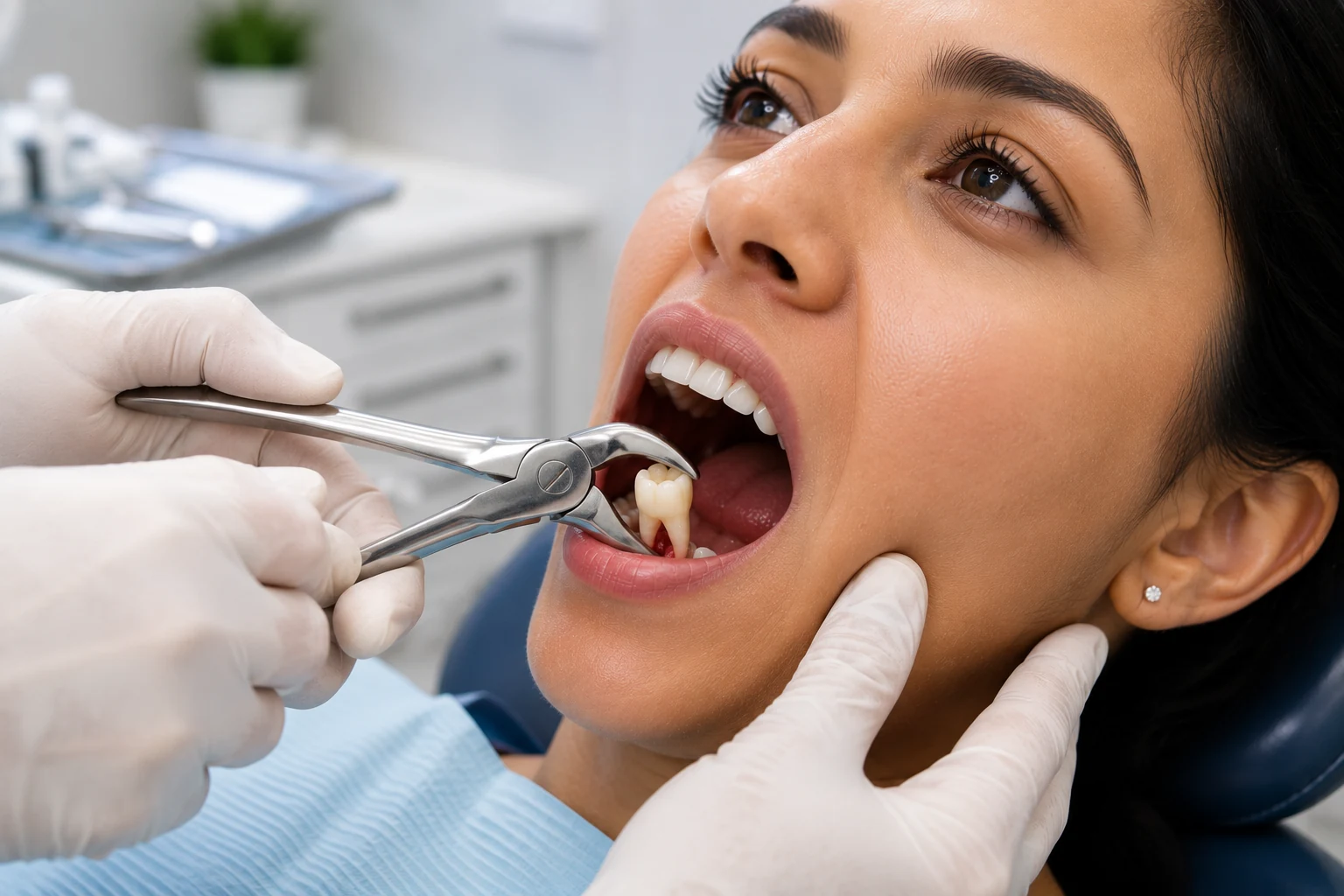
Wisdom tooth assessment and removal in Udaipur for suitable painful, impacted or repeatedly infected third molars, planned after dental examination and imaging when required.
Not every wisdom tooth requires extraction
Root position and nearby anatomy are assessed when required
Routine and impacted teeth are managed according to complexity
Pain control, socket care and warning signs are explained
Not every wisdom tooth needs removal. Treatment is considered when a third molar is causing pain, infection, decay, damage to nearby teeth or another clinically significant problem.
Partially or fully impacted wisdom teeth are assessed for position, symptoms and risk to nearby structures.
Repeated inflammation or infection around a partly erupted wisdom tooth may be a reason to consider removal.
Decay in the wisdom tooth or damage to the adjacent molar is evaluated during treatment planning.
More complex or impacted teeth may require a surgical approach based on root shape and position.
Healing, pain control and socket care are reviewed after removal when clinically indicated.
Eruption, impaction and root anatomy guide treatment planning
Structured surgical and infection-control protocols
Decay or damage to the adjacent molar is assessed
Dry socket, infection and nerve-related risks are discussed when relevant
Surgical approach is matched to tooth position and complexity
Healing and post-operative concerns can be reviewed
We assess pain, swelling, eruption pattern, gum condition, decay, neighbouring teeth, medical history and imaging before deciding whether removal is necessary and how it should be performed.
Removal may be recommended for wisdom teeth associated with repeated infection, decay, pain, cystic change, damage to nearby teeth or another clear dental indication.
Asymptomatic wisdom teeth without disease may sometimes be monitored rather than removed. The decision depends on examination, imaging and individual risk.
The tooth is assessed and the area is numbed. Depending on its position, it may be removed routinely or through a surgical approach involving gum access and sectioning of the tooth when required.
Swelling, tenderness, limited mouth opening and mild bruising can occur after removal, especially after surgical extraction. Symptoms usually improve as healing progresses, but recovery varies.
| Stage | What to Expect |
|---|---|
| Assessment | Examination and imaging when needed determine whether removal is indicated. |
| Removal day | The tooth is removed under local anaesthesia using the planned approach. |
| First 2–3 days | Swelling, soreness and limited mouth opening can be most noticeable. |
| Following week | Symptoms generally reduce as the socket heals. |
| Review | Follow-up is arranged when stitches, symptoms or surgical complexity require it. |
Follow the prescribed cleaning, diet and medication instructions and avoid disturbing the blood clot in the extraction socket.
Seek review for worsening swelling, fever, uncontrolled bleeding, persistent numbness or increasing pain after an initial improvement.
Wisdom tooth removal can address disease or recurrent symptoms, but surgery carries risks such as pain, swelling, dry socket, infection, bleeding and nerve-related altered sensation in selected lower-tooth cases.
| Category | Details |
|---|---|
| Potential benefits |
|
| Important considerations |
|
No. Wisdom teeth without disease or symptoms may sometimes be monitored. Removal is generally based on a clear clinical indication.
An impacted wisdom tooth has not erupted normally because of its position, lack of space or obstruction by surrounding bone, gum or another tooth.
The procedure is performed with local anaesthesia. Soreness, swelling and limited mouth opening are common during early recovery.
Recovery varies with extraction complexity. Swelling often peaks early and then improves, while the socket continues healing for longer.
Dry socket is a painful complication in which the protective blood clot in the extraction socket is lost or breaks down before normal healing progresses.
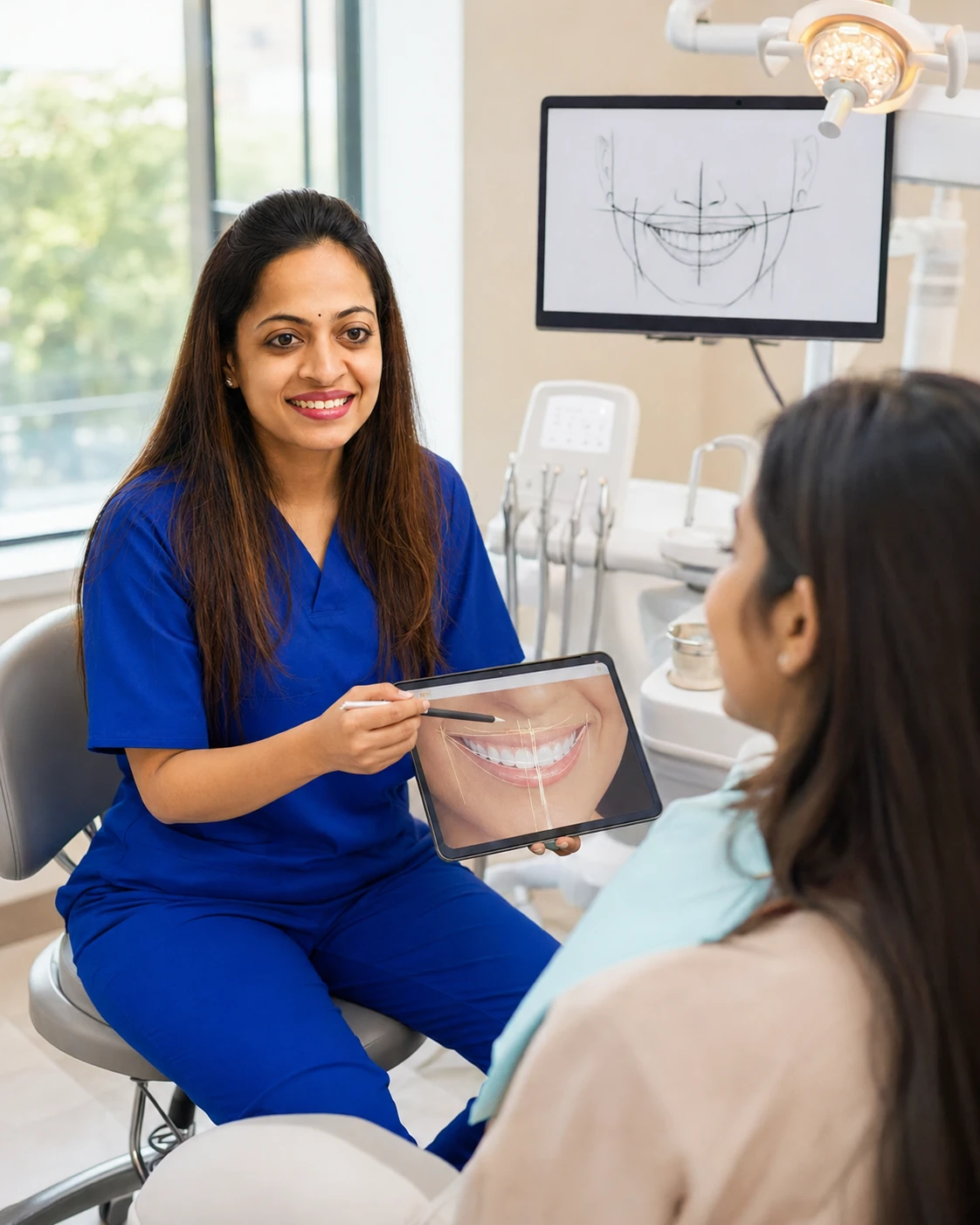
Dermadent Clinic, Udaipur offers wisdom tooth consultation with symptom review, dental examination and imaging-based assessment when needed, followed by individualised removal and aftercare planning.
BOOK A CONSULTATION
Choose your department, service, preferred date and time. Your request will be saved securely on the website.