Chemical Peel for Skin: Types, Benefits, Downtime and Who Should Avoid It
Chemical peels use controlled chemical exfoliation to remove damaged surface layers of skin and stimulate renewal. Depending on the agent and depth, a peel may be used for acne, post-acne marks, uneven tone, rough texture, superficial pigmentation, fine lines and selected scars. The word “peel” can sound simple, but treatment strength varies from mild superficial peels with little downtime to deeper medical peels with more significant healing and risk.
For people searching for a chemical peel in Udaipur, the safest approach is to match the peel to the skin concern and skin type. Stronger is not automatically better. Indian skin tones can be prone to post-inflammatory hyperpigmentation when treatment is too aggressive, so dermatologist selection of the acid, concentration, contact time and preparation matters.
How Chemical Peels Work
A peeling agent is applied to the skin for a controlled period. It loosens bonds between surface cells or creates a controlled injury at a chosen depth. As the skin heals, surface texture and pigmentation can improve. Different acids behave differently, which is why glycolic acid, salicylic acid, lactic acid, mandelic acid and trichloroacetic acid are not interchangeable.
Superficial, Medium and Deep Peels
| Depth | Common Targets | Downtime | Risk Level |
|---|---|---|---|
| Superficial | Oily skin, mild acne, superficial pigmentation, texture | Minimal to a few days | Lower when appropriately selected |
| Medium | More pronounced pigmentation, fine lines, selected scars | Several days to longer | Higher; requires careful selection |
| Deep | Severe photoageing or deeper texture concerns | Significant | Highest; not routine for many Indian skin tones |
Glycolic Acid Peels
Glycolic acid is an alpha-hydroxy acid used for dullness, superficial pigmentation, comedonal acne and fine texture. Concentration and contact time strongly affect the depth. People using retinoids or other exfoliants may need to pause them before treatment to reduce irritation.
Salicylic Acid Peels
Salicylic acid is oil-soluble and can penetrate into oily follicles, making it useful for acne-prone and seborrhoeic skin. It also has anti-inflammatory properties. Patients with certain allergies or medical conditions should disclose them before treatment.
Mandelic and Lactic Acid
Mandelic acid has a larger molecular size and may penetrate more gradually than glycolic acid, which can make it useful in selected sensitive or pigmentation-prone skin. Lactic acid is also used for superficial exfoliation and hydration-focused treatment. The “gentlest” peel still needs professional selection if the patient has active dermatitis or a damaged skin barrier.
TCA Peels
Trichloroacetic acid can be used at different strengths and depths. It is also used in the targeted TCA CROSS technique for selected ice-pick acne scars. Strong TCA should never be applied at home because uncontrolled penetration can cause burns, scarring and pigmentation.
Chemical Peels for Acne
Peels can help reduce comedones, oiliness and post-acne marks, but they are usually adjuncts rather than stand-alone cures for moderate or severe acne. Active nodules or cysts may need prescription therapy first. Read our acne treatment guide for medical options.
Chemical Peels for Pigmentation
Superficial peels can help certain forms of epidermal pigmentation and post-inflammatory dark marks. Melasma is more complex and often recurs, so sunscreen, topical therapy and trigger management remain essential. A peel without daily sun protection can produce short-lived or inconsistent results.
Learn more in our pigmentation and melasma guide.
Chemical Peels for Acne Scars
Mild textural changes and post-acne marks can improve with superficial peels, but deep boxcar, rolling or ice-pick scars usually require scar-specific procedures. Combining peels with microneedling, subcision or laser may be more appropriate depending on scar type. See our acne scar treatment in Udaipur page.
What Happens During a Peel?
- The dermatologist examines the skin and confirms the indication.
- The face is cleansed and degreased.
- Sensitive areas may be protected.
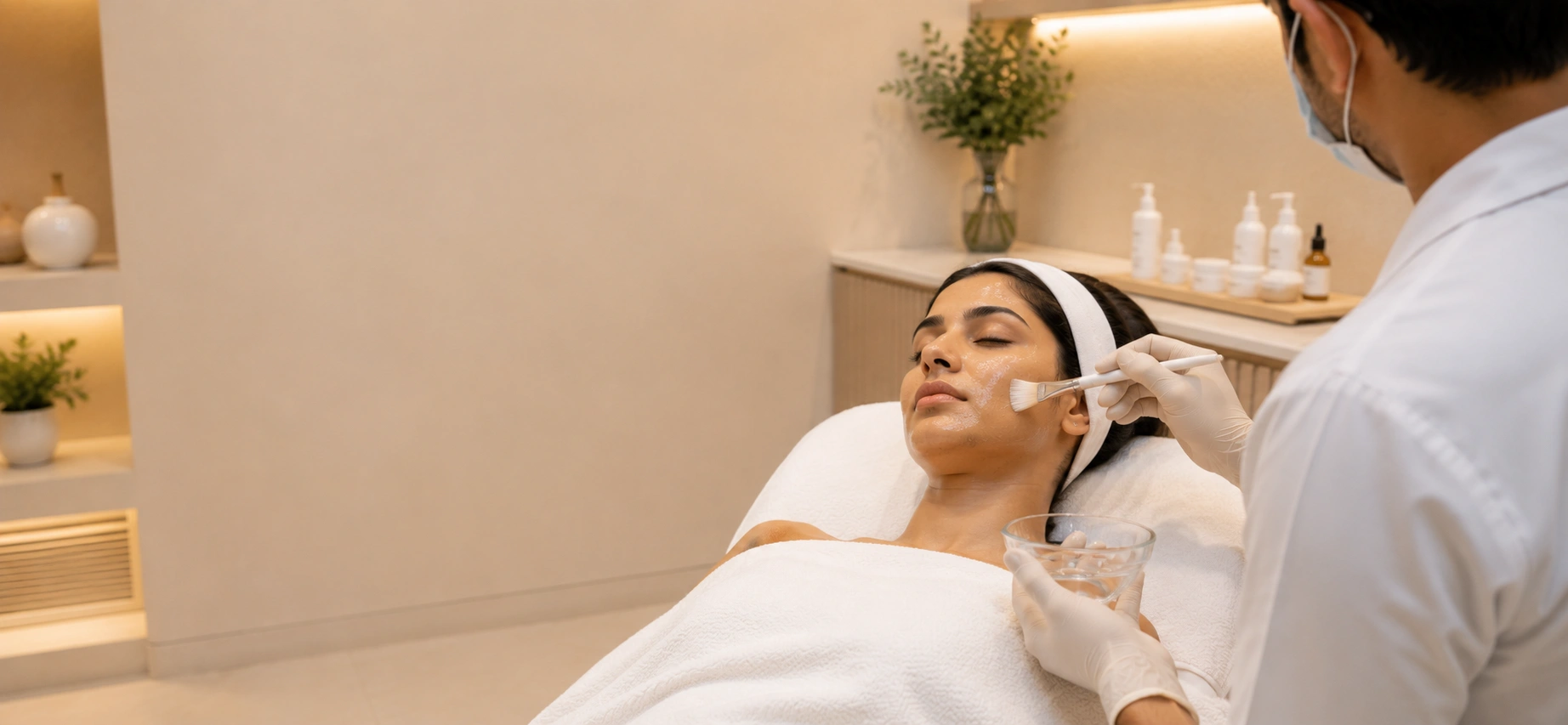
- The peel solution is applied in a controlled manner.
- The skin is monitored for the planned endpoint.
- The acid is neutralized or removed if required by the product.
- Soothing moisturizer and sunscreen are applied according to protocol.
Does a Chemical Peel Hurt?
Superficial peels may cause tingling, warmth or mild stinging. Stronger peels can feel more intense. Pain level depends on the acid, depth and skin sensitivity. Severe uncontrolled burning is not a normal goal and should be reported immediately.
What Does Downtime Look Like?
Some superficial peels cause almost no visible peeling, while others produce dryness, tightness and fine flaking for several days. Medium-depth treatments can create darker surface colour, crusting and more obvious peeling. Visible peeling is not required for a peel to have biological effect.
Aftercare
- Use a gentle cleanser.
- Apply a bland moisturizer as recommended.
- Use broad-spectrum sunscreen consistently.
- Do not pick or pull peeling skin.
- Avoid scrubs, retinoids and strong acids until cleared.
- Avoid unnecessary heat, steam and intense exercise during early irritation.
- Follow the dermatologist’s product-specific instructions.
Who Should Avoid or Delay a Chemical Peel?
Patients with active skin infection, open wounds, uncontrolled dermatitis, significant sunburn or a severely disrupted skin barrier should usually delay treatment. Pregnancy affects which acids and accompanying medicines can be used. A history of keloids, abnormal wound healing or recent aggressive procedures should also be discussed.
Chemical Peels and Isotretinoin
If you are taking or recently took isotretinoin, tell the dermatologist. Recommendations about timing depend on procedure depth and current evidence. Do not book a strong peel without disclosing medication history.
Risks and Side Effects
Possible effects include redness, irritation, dryness, post-inflammatory hyperpigmentation, hypopigmentation, infection, prolonged sensitivity and, rarely, scarring. Risk increases with deeper treatment, poor patient selection, excessive contact time and inadequate aftercare.
Why DIY Peels Are Risky
High-strength acids sold online can cause chemical burns. Home users cannot reliably judge penetration depth or neutralization endpoints, and strong acids can continue damaging skin beneath the surface. Pigmentation and scarring may take far longer to treat than the original concern.
How Many Sessions Are Needed?
Superficial peels are often performed as a series, with intervals that allow recovery. The number depends on acne severity, pigmentation depth, skin tolerance and the chosen acid. A dermatologist should reassess response instead of automatically repeating the same peel indefinitely.
Chemical Peel vs HydraFacial
A chemical peel creates controlled exfoliation using acids, while HydraFacial-style treatments focus more on cleansing, exfoliation, extraction and hydration. The choice depends on whether the priority is active acne, pigmentation, texture, sensitivity or simply short-term skin refreshment. Read our HydraFacial vs chemical peel comparison.
Reliable Dermatology Guidance
The American Academy of Dermatology describes chemical peels as procedures used for selected cosmetic concerns and emphasizes proper dermatologist assessment and aftercare. General information is available from the AAD chemical peel FAQs.
Frequently Asked Questions
Will my skin definitely peel after a chemical peel?
No. Some superficial peels create biological exfoliation without obvious sheets of peeling.
Can chemical peels permanently remove melasma?
No. Melasma is a chronic recurrent pigmentation condition. Peels may improve it as part of a broader plan but do not permanently remove the tendency.
How soon can I wear makeup?
Timing depends on peel depth and skin-barrier recovery. Follow your dermatologist’s instruction.
Can I use retinol after a peel?
Not immediately. Retinoids are usually paused until irritation and peeling have settled.
Chemical Peel Treatment in Udaipur
Dermadent Clinic provides chemical peel treatment in Udaipur for acne, pigmentation and texture concerns. The peel type and strength are selected according to skin tone, diagnosis and downtime tolerance rather than using the same solution for every patient.
This article is educational and does not replace a dermatologist’s assessment or procedure-specific advice.